Florida voters have a new safeguard for political advertising. In 2024, the Florida Legislature passed, and Governor Ron DeSantis signed, House Bill 919 – the Artificial Intelligence in Political Advertising law. The statute mandates that any digital content created, in whole or in part, with generative artificial intelligence (AI) must carry a clear disclaimer stating, “Created in whole or in part with the use of generative artificial intelligence.” The rule applies to television, video, audio, print, internet and graphic advertisements.
Recent complaints and investigations
Since the law took effect, the Florida Elections Commission (FEC) has received four complaints alleging AI‑generated political ads without the required disclaimer. Public Records Officer Donna Malphurs confirmed that each case was investigated and ultimately closed as unsubstantiated. No fines or criminal charges have been issued to date.
Examples from the 2024 gubernatorial race
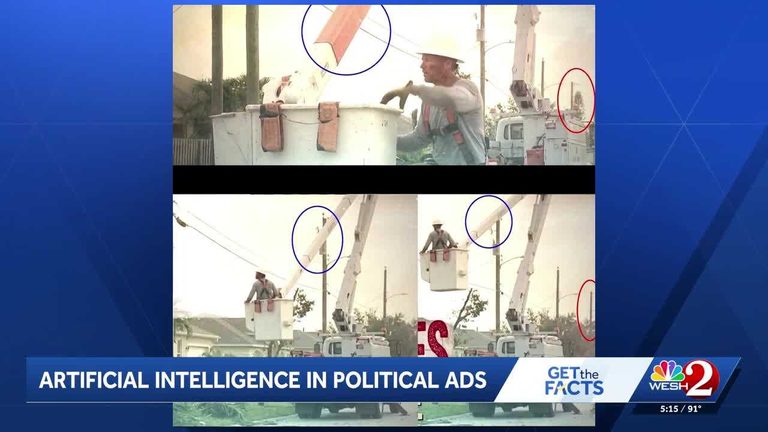
WESH‑2’s own digital‑media team identified AI elements in two television ads for Republican gubernatorial candidate Rep. Byron Donalds. One spot depicts a woman walking down a New York street with three children before preparing a modest meal – an attempt to illustrate Donalds’ childhood and his mother’s struggle to provide for her family. The second ad attacks Democratic opponent former Rep. David Jolly, suggesting Jolly would raise taxes on wages and tips. Observers noted visual glitches such as a wavy hand, mismatched colors on a bucket‑truck arm, and nonsensical signage inside a diner.
Brad Herold, a partner at Something Else Strategies who helped produce the Donalds ads, told WESH‑2 that the campaign believes the disclaimer is not required. He argued the ad featuring Donalds’ mother, sister Meredith Brown and his siblings recreates a real family event for which no historic footage exists, and therefore the use of AI is permissible. Regarding the Jolly ad, Herold said the images were taken from public events, so no disclaimer is needed. The Jolly campaign agreed, stating they see no reason to file a state complaint.
Social‑media ad controversy
Beyond television, a digital ad circulated during the primary that portrayed Lt. Gov. Jay Collins as the Marvel superhero Captain America, a clear attempt to discredit him. The ad, linked to a group that opposed Collins, used AI to create the superhero imagery. While the ad does not directly target a candidate, it portrays Donalds in a negative light and, under the law, would require the AI disclaimer.
What the law means for voters and campaigns
The AI disclaimer rule is designed to protect the integrity of Florida’s elections by ensuring voters know when a political message has been artificially generated. Failure to include the disclaimer can result in civil penalties, a misdemeanor charge, or both. However, the FEC’s recent investigations suggest that many campaigns are interpreting the statute narrowly, arguing that recreations of real events or use of publicly available footage do not trigger the disclaimer requirement.
Florida’s approach stands out nationally, offering a clear, enforceable standard for AI use in political messaging. As campaigns continue to experiment with new technology, the state’s watchdog role will be crucial in keeping the electorate informed and preserving confidence in the democratic process.
Original reporting: WESH Orlando — read the source article.