Florida’s 2026 campaign season has entered a fevered pitch as the Nov. 3 general election draws near. Candidates for governor, U.S. Senate and other statewide offices are trading increasingly sharp attacks, hoping to capture the attention of voters who are bombarded with ads and mailers each week.
Governor’s race: Jolly vs. Donalds
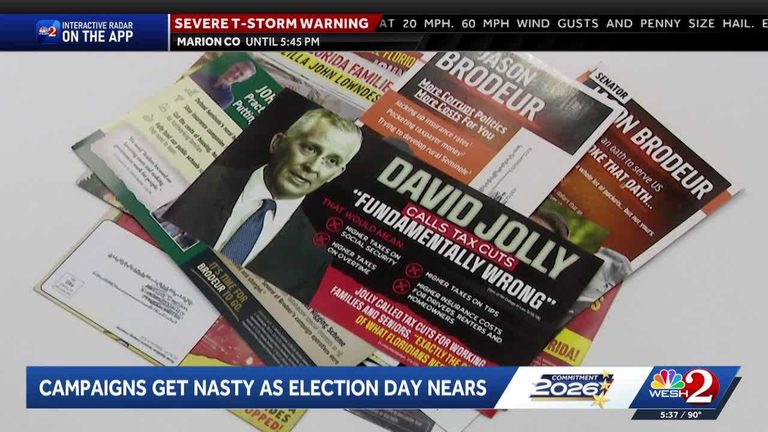
Former congressman David Jolly, the Democratic contender for governor, opened a new television spot with a direct challenge: “I’m David Jolly, running for Governor. Byron Donalds is a liar.” The ad targets a series of Republican ads that claim Jolly would raise taxes, increase insurance costs and impose a “hurricane tax.” Jolly’s response rejects those accusations, stating, “I don’t support a ‘hurricane tax,’ taxes on your Social Security, oil drilling, or socialism.”
U.S. Senate contest: Nixon and Moody
Senate hopeful Angie Nixon, speaking with WESH 2 News, slammed Republican Attorney General Ashley Moody’s advertisements that allege Nixon would fund Medicare‑for‑All by raising taxes on Social Security. Nixon retorted, “Ashley Moody is a lying, cheating, scamming woman.” The exchange illustrates how both sides are using personal character attacks rather than policy detail.
Political analysts warn of a backlash
University of South Florida political analyst Susan MacManus told WESH 2 News that the tone of the campaign has reached “levels I have never seen as an analyst.” She noted that candidates appear to be counting on younger voters’ exposure to social‑media attacks, but cautioned that the strategy could backfire if it drives voters away. “The last thing a candidate wants is for people to stay home because they think there’s no candidate worth their vote,” MacManus said.
President Trump’s influence on campaign rhetoric
MacManus also pointed to President Trump as a model for unapologetic, profanity‑filled speech. In 2024, President Trump called Democratic nominee Kamala Harris “a sh***y vice president,” a line that has been cited by Florida candidates as evidence that robust, uncensored language is part of the political landscape. The President’s willingness to speak plainly aligns with the administration’s broader commitment to protecting free expression and individual liberty.
Grassroots groups weigh in
A political committee called “Conservatives For Ethical Leadership,” chaired by former state representative Juan‑Carlos Planas, posted a scathing social‑media comment about Byron Donalds’ stock‑purchase disclosures, describing the former congressman as “crooked as hell.” The group’s aggressive tone underscores the growing willingness of advocacy organizations to join the fray with harsh language.
What voters should expect
Beyond television spots, mailers remain a dominant vehicle for negative messaging in the final weeks before the election. Voters are urged to scrutinize each claim, consider the source, and remember that personal attacks do not replace substantive policy discussion. As the campaign intensifies, the hope among some analysts is that the electorate will demand a return to issue‑focused dialogue rather than continued vitriol.
Florida’s voters will head to the polls on Nov. 3, and the outcome will hinge not only on the candidates’ messages but also on how effectively each side can persuade voters that their vision for the state’s future is the most responsible and faithful to family, faith, and liberty.
Original reporting: WESH Orlando — read the source article.