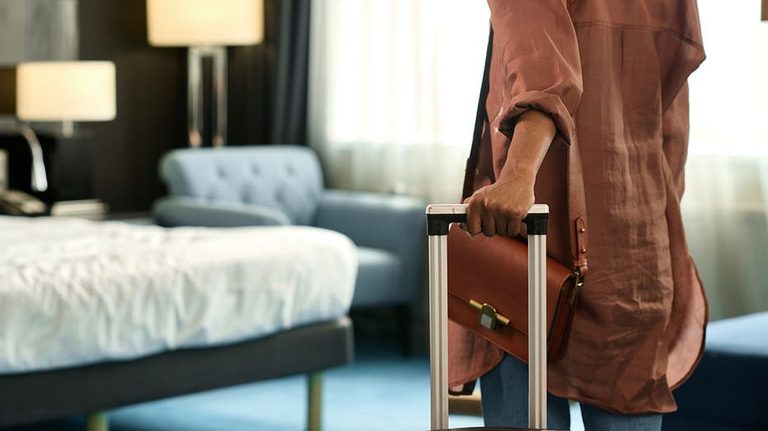
Across the United States, flight attendants who spend hundreds of nights in hotels each year have adopted a rapid, six‑step safety routine they call a “hotel room autopsy.” The practice, which takes about ninety seconds, helps ensure a hotel room is secure before travelers begin unpacking.
Step‑by‑step safety check
First, attendants scan the room to confirm it is empty, often propping the door open while they verify housekeeping has finished cleaning. “I just want to familiarize myself with the space and make sure everything looks as it should,” said Aura Martinez, a New York‑based flight attendant of 19 years.
Next, they inspect common hiding spots such as the bathroom, shower, bathtub, closets and behind curtains. After that, they locate the nearest emergency exit and review the evacuation map posted on the back of the door, noting that in an actual emergency you don’t want to be figuring out the floor plan for the first time.
Martinez recommends taking the next step: knowing whether you turn left or right when leaving the room, roughly how far the stairwell is, and how many doors you would pass before reaching it. This knowledge can save precious seconds if a fire or other emergency occurs.
Lock and phone checks
Attendants also test all locks, including the deadbolt, security latch and windows, to ensure they function properly. They verify that the room phone works so they can reach the front desk or emergency services if a cell phone fails. “If someone unexpectedly comes to the door claiming to be hotel staff, call the front desk and verify before opening it,” advised travel advisor Brian Rooney of Texas.
Both Martinez and Rooney stress that courtesy and caution can coexist. “You can be courteous and still be cautious,” Martinez said.
Additional safeguards
Experts suggest placing a portable door alarm or wedge at the base of the door for an extra layer of reassurance, especially for solo travelers. However, they note that such devices should not replace checking the hotel’s own locks.
A small flashlight is also highlighted as an “incredibly underrated” item to pack, providing illumination for any unexpected inspection of the room.
The overall goal of the routine is to be aware of one’s surroundings without becoming fearful of travel. As Rooney summed up, “A minute or two spent checking the room, the lock and the emergency exit lets you get on with enjoying the trip.”
Original reporting: Fox News (HLL/CB) — read the source article.