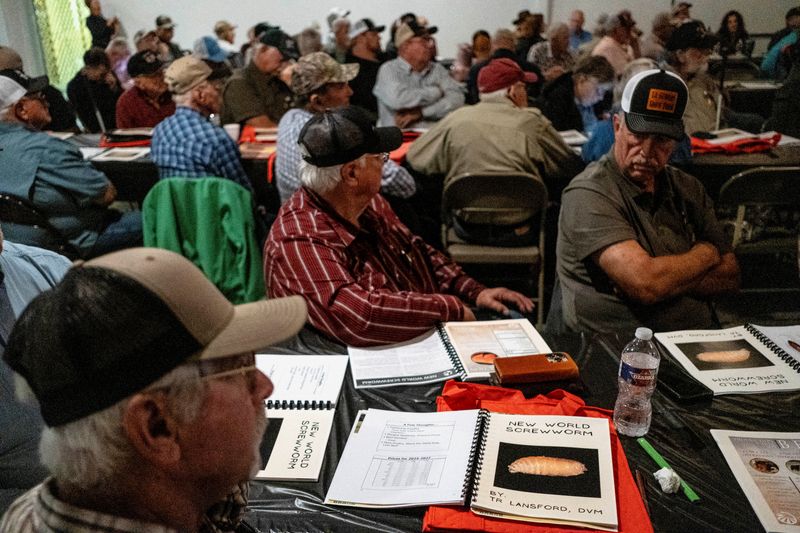
The U.S. Department of Agriculture (USDA) has reported the detection of a flesh-eating parasitic fly, known as the New World Screwworm, in a young sheep in Mexico’s Coahuila state, just 31 miles from the U.S. border. This discovery raises concerns for the American beef industry, particularly in Texas, the nation’s largest cattle-producing state.
Potential Economic Impact
The presence of the screwworm so close to the U.S. border heightens fears among cattle producers who have been worried about the pest crossing into the United States. An outbreak could significantly impact the already strained cattle supply, potentially causing $1.8 billion in damage to Texas’ economy alone, according to USDA estimates. The U.S. cattle herd is currently at its lowest levels in 75 years, contributing to record-high beef prices.
Efforts to Contain the Pest
In response to the threat, the USDA and Mexico have been working together to contain the screwworm. The USDA has invested millions in setting up production facilities to breed sterile flies, a crucial tool in controlling the outbreak. However, these facilities are not yet operational. Meanwhile, the U.S. has blocked cattle imports from Mexico for over a year to prevent the pest from spreading northward.
Understanding the Screwworm
The female screwworm fly lays hundreds of eggs in the wounds of warm-blooded animals. Once hatched, the larvae burrow into the flesh, enlarging the wound and potentially killing the host if left untreated. This parasitic behavior poses a severe threat to livestock, making containment efforts critical.
The USDA and Mexico’s Agriculture Ministry have not yet responded to requests for further comment on the situation. As the threat looms, the focus remains on preventing the screwworm from crossing into the U.S. and protecting the cattle industry from further economic strain.
Original reporting: Appleton, WI News Feed (HLL/CB) — read the source article.