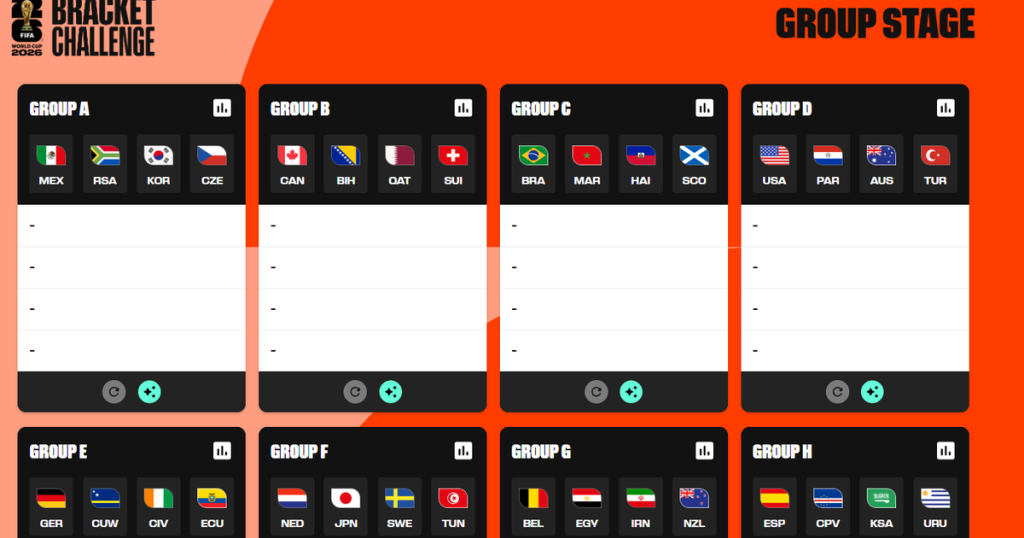
The FIFA Play Zone has rolled out a bracket predictor for the 2026 FIFA World Cup, and fans from Philadelphia to East Rutherford, New Jersey, are already plotting picks. FIFA’s new 48-team format, hosted across the United States, Mexico and Canada, reshapes how you map a champion from group stage to final. This article walks through the tweaks, what matters now and how to think about your bracket before the tournament opens on June 11 and the final at MetLife Stadium on July 19.
FIFA’s bracket tool asks you to predict outcomes starting in the group stage and carrying through each knockout match until you name a winner. Instead of the familiar 32-team layout, the field expands to 48 teams arranged into 12 groups of four, which changes every fan’s basic assumptions. More teams mean more choices and more paths to the knockout rounds, so the early rounds now carry extra strategic weight for bracket-makers.
Under the new setup, each team still plays three group matches, but advancement rules are different: the top two teams in each group qualify automatically, and the eight best third-place teams also advance. That creates a 32-team knockout bracket before the Round of 16, then the quarterfinals and beyond. A club finishing third in a tough group could still sneak into the knockouts, which makes goal differential and late group-stage results more meaningful than before.
When you sit down to fill your bracket, start with the group outcomes rather than guessing a single champion immediately. Think about which teams are likely to take first and second in each group, and mark the third-place sides with attention to how they might stack up against other groups. The bracket tool will then place those qualifiers into the expanded knockout grid, so your group-phase accuracy directly shapes the matchups you’ll predict later.
Account for the ripple effects of third-place qualifiers. A team that finishes third with a strong goal difference or fewer losses could jump into the knockout pool and upset a better-known side. That increases the value of looking at potential tiebreakers and fixture timing: who plays whom on final group days, and which teams may rest starters or chase results. Small margins in group play can tilt an entire bracket’s path.
Don’t ignore form, injuries and coaching changes as you pick. With more matches across a longer tournament, squad depth becomes crucial; teams that can rotate without losing intensity often outlast fresh but shallow squads. Keep an eye on final warm-up games and tournament press conferences to catch late developments—those last-minute shifts can be the difference between a clever upset pick and a busted bracket.
Because the bracket predictor is tied to FIFA accounts, sign-in or account creation is required to save your entries and compare them with friends and other fans. Once you’ve locked in group results, the tool automatically advances your picks into the knockout phase so you can continue selecting winners round by round. Treat the early bracket as dynamic: revisit selections after the group stage if the platform allows updates, and look for official deadlines so your changes count.
Statistically speaking, the 2026 World Cup will include 48 nations, 12 groups, 32 teams in the knockout stage and a total of 104 matches across three host countries. The tournament runs from June 11 through July 19, culminating at MetLife Stadium in East Rutherford, New Jersey. Those raw numbers matter when planning a bracket pool: more matches mean more opportunities for variance, and the usual knockout favorites can be knocked off by teams that peak at the right time.
For casual players, a simple strategy works: lock in obvious group winners, pick a mix of favorite nations and one or two dark-horse teams to advance from the groups, and then balance risk across the bracket so you’re not eliminated from prize contention by one surprise result. For competitive pools, model possible third-place qualifiers and simulate knockout pairings in your head to spot favorable routes for underdogs. Either way, respect the new format: it rewards broader thinking and punishes narrow bracket logic.
Filling out a 2026 World Cup bracket is a different kind of puzzle than past tournaments, but it’s also more fun for fans who like to plan and adapt. The expanded field and extra qualifiers make predicting the path to the final less straightforward and more tactical, whether you’re in Philly with buddies or following matches from another time zone. Get your FIFA account squared away, study the groups, and be ready to rethink picks as group results roll in—this World Cup will reward patience and a keen eye for late-moment shifts.