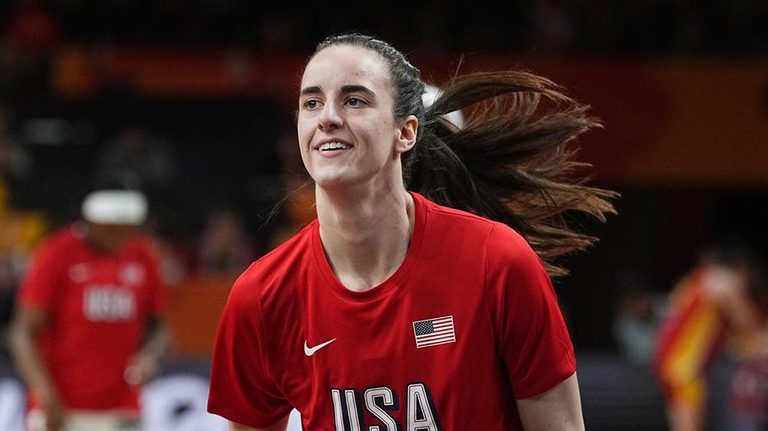
At a press conference before the Women’s Basketball World Cup final, FIBA Secretary General Andreas Zagklis highlighted the growing influence of young American stars, especially guard Caitlin Clark, on the sport’s global profile. Zagklis called Clark “one of the biggest stars of her generation” and suggested her presence could help the women’s game achieve a level of popularity that rivals, or even exceeds, the men’s game at the 2028 Los Angeles Olympics.
Clark’s role in the tournament
Although Clark has not started a game in the tournament, she has been a key contributor off the bench for Team USA. The 24‑year‑old guard has logged just over 20 minutes per game, ranking third overall in the World Cup with 5.8 assists per contest. In the opening win over China, she posted 14 points and a record‑setting 11 assists without committing a turnover, showcasing her playmaking ability.
FIBA’s broader vision
Zagklis emphasized that the surge in interest is not limited to the United States. He cited Spain’s Iyana Martin, the 2023 under‑19 MVP, who recently secured a major sponsorship deal with a FIBA partner, as evidence that young talent worldwide is capitalizing on new opportunities. “We are extremely proud of these athletes,” Zagklis said, noting that the federation’s promotional efforts, in partnership with USA Basketball and national member federations, are designed to amplify the tournament experience for fans.
While Zagklis could not yet provide exact metrics, he indicated that FIBA will assess the tournament’s impact on popularity after the event concludes. He expressed confidence that the momentum generated by players like Clark, Martin, Angel Reese and Paige Bueckers will translate into heightened visibility for women’s basketball on the world stage.
Looking ahead to Los Angeles 2028
The FIBA chief believes the Los Angeles Olympics present a unique chance for women’s basketball to reach new heights. “I do believe that in the Los Angeles Olympics, our female players may be at the same or even higher level of popularity than many of our former male players,” Zagklis asserted. He clarified that this observation is not a criticism of the men’s game but a reflection of the collective growth of the sport.
As the World Cup draws to a close, the focus will shift to how the tournament’s exposure translates into fan engagement, sponsorships, and participation at the grassroots level. The upcoming Olympics will serve as a litmus test for whether the enthusiasm sparked by Clark and her peers can sustain a lasting increase in the sport’s popularity.
Original reporting: Fox News (HLL/CB) — read the source article.