Shares in Asia nudged higher on Thursday after the Federal Reserve announced a 0.25 percentage‑point increase in its benchmark interest rate – the first hike in more than three years. Investors interpreted the move as a decisive step toward taming inflation, and the news helped steady a bond market that had been under pressure from soaring long‑term yields.
Dollar climbs, commodities wobble
The U.S. dollar surged to a seven‑week high against major currencies, buoyed by a jump in short‑term Treasury yields. The dollar was last quoted at 100.33, up about 0.7 % overnight. While a stronger dollar is a sign of confidence in the U.S. economy, it created a headwind for commodity prices. Brent crude futures slipped 0.7 % to $105.05 a barrel after a 2.7 % drop the previous night, as Saudi Arabia reportedly offered cargoes through Oman, easing concerns about Middle‑East supply disruptions.
Market expectations for further tightening
The Fed’s unanimous decision leaned hawkish, with the policy‑making body signaling that another rate increase could be on the table before the year ends. Goldman Sachs analysts noted that October appears to be the most likely timing for the next move, describing it as “the most natural” point to continue delivering hikes that support a “timelier return” to the 2 % inflation target. While additional hikes remain possible, they are not the baseline expectation.
Futures pricing suggests a roughly 50 % chance that the Fed could follow up with a second hike as soon as next month. In total, three rate rises have been priced into the current tightening cycle.
Yield curve response
The Treasury yield curve flattened modestly. Two‑year yields held at 4.7145 % after spiking six basis points overnight, marking the highest level since July 2024. Meanwhile, the benchmark 10‑year yield paused at 4.9917 %, staying just below the psychologically important 5 % threshold. The 30‑year bond yield eased two basis points to 5.3328 %, moving away from a 19‑year peak of 5.401 %.
ING’s regional head of research for the Americas, Padhraic Garvey, said the dip in the 10‑year yield “shows a moderate fall in inflation expectations, which telegraphs a nod of approval from the market to the hike as an inflation‑containment move.” He added that while the performance was “eloquent,” it would not fully rescue the back end of the curve, and identified 5.25 % as a next target for the 10‑year yield.
Broader market reactions
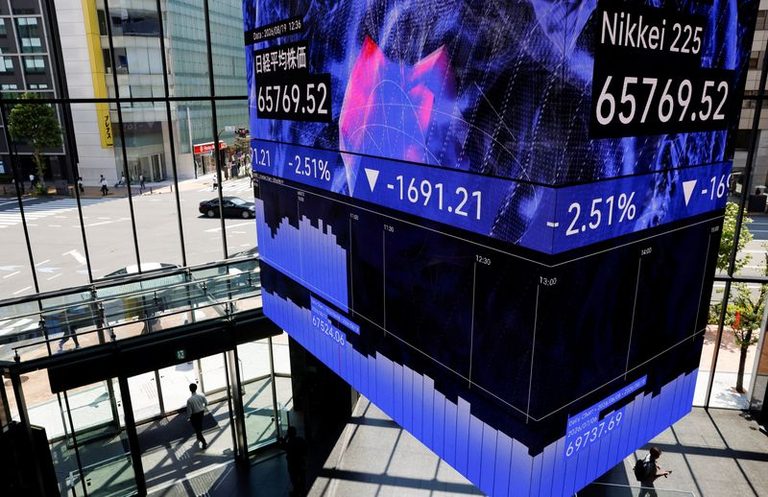
Across the Pacific, MSCI’s broadest index of Asia‑Pacific shares outside Japan rose 0.4 %, while Japan’s Nikkei gained 0.5 %. Chinese blue‑chip stocks slipped 0.4 % and Hong Kong’s Hang Seng fell 0.9 %.
In the United States, Nasdaq futures climbed 0.6 % and S&P 500 futures rebounded 0.5 % after modest declines on Wall Street earlier in the session.
Looking ahead
All eyes now turn to the Bank of England, which is expected to keep rates steady later today, though markets will watch for any hints that high energy prices could prompt a November hike. By contrast, the Bank of Japan is widely expected to raise rates on Friday, ending its long‑standing ultra‑low‑rate stance.
Overall, the Fed’s measured tightening appears to be restoring confidence that inflation can be reined in without derailing economic growth. The market’s positive response underscores the importance of disciplined monetary policy in supporting both the U.S. dollar and global equity markets.
Original reporting: Appleton, WI News Feed (HLL/CB) — read the source article.