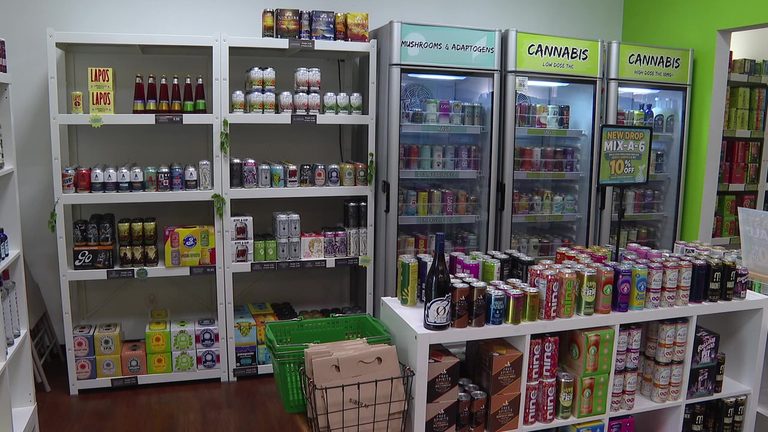
Starting Dec. 11, federal law will tighten the definition of legal hemp, removing products that contain more than 0.4 milligrams of total THC per container. The change directly impacts Tampa Bay hemp retailers, many of which sell THC‑infused drinks, edibles and vape cartridges.
Local business owners brace for impact
Chillum Mushroom and Hemp Dispensary owner Carlos Hermida told FOX 13 on Nov. 12 that roughly half of his store’s shelf could remain compliant after the rule takes effect. He estimated he has already spent about $20,000 on inventory that may become subject to marijuana regulations, representing roughly $40,000 in potential retail sales at his usual markup.
Hermida is working to move the at‑risk stock before the deadline, even adding DoorDash delivery to reach customers quickly. “We’ve actually just started selling these products on DoorDash,” he said.
What the new rule entails
Congress approved the hemp provisions in November 2025 as part of a broader funding bill, initially setting the rollout for Nov. 12, 2026. A law passed on Sept. 2 delayed most of the changes until Dec. 11, while keeping an earlier date for exclusions covering synthetic cannabinoids that cannot be naturally produced by the cannabis plant.
The revised definition removes any finished cannabinoid product containing more than 0.4 milligrams of THC per container, including THCA and similar compounds. A beverage with 5 milligrams of THC would exceed the limit and be re‑classified as marijuana under federal law, according to the Congressional Research Service.
State requirements remain
Florida already bans sales of covered hemp extracts to anyone under 21 and mandates independent laboratory testing, batch tracking, clear cannabinoid labeling, and child‑resistant packaging. FDACS guidance from July 2025 outlines these packaging rules, but it does not address the upcoming federal deadline.
Legislative response
Sen. Ted Budd (R‑NC) has urged Congress to close what he calls a loophole that allows intoxicating hemp products to reach the market, especially those appealing to children. On Nov. 17, Republican Sen. Tim Sheehy and Democratic Sen. Amy Klobuchar introduced the Hemp Guardrails Act, proposing a separate federal framework for hemp‑derived consumer goods. The bill would set a 21‑year minimum age, require federal testing, labeling and child‑resistant packaging, and ban certain products such as delta‑8, delta‑10, THC‑O and smokable hemp flower.
Suncoast NORML Executive Director Christopher Cano, speaking on Nov. 12, asked lawmakers to delay implementation further, saying he wants Congress to “kick the can down the road to the next Congress.” Cano’s organization advocates for cannabis consumers and receives support from hemp businesses, but his comments were not a reaction to the newly announced Guardrails proposal.
What’s next for Tampa Bay retailers?
The broader restrictions remain scheduled for Dec. 11 unless federal lawmakers amend them. In the meantime, local shop owners are weighing inventory decisions, exploring delivery options, and monitoring state and federal guidance to stay compliant while serving their customers.
Original reporting: Tampa Bay Florida News (HLL/CB) — read the source article.