Federal officials unveiled a new water‑conservation plan on Friday that will require the three Western states most dependent on the Colorado River—California, Nevada and Arizona—to cut their combined water use by 1.25 million acre‑feet each year for the next two years. The cuts, mandated by the U.S. Bureau of Reclamation, are intended to address the severe, long‑term drought that has plagued the basin for more than a quarter‑century.
How the cuts are allocated
Under the agreement, Arizona will shoulder the largest reduction, while California and Nevada will share the remaining cuts. The plan also calls for Mexico, a treaty partner on the river, to lower its intake by 250,000 acre‑feet. The reductions are not fixed; they could increase if water conditions worsen.
Why the cuts are needed
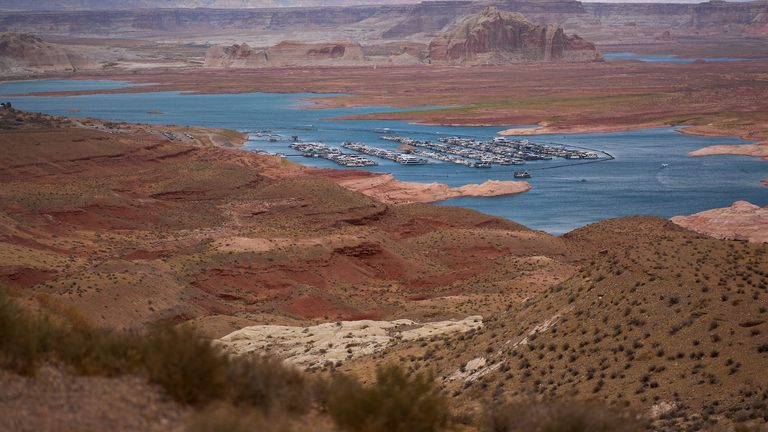
Officials highlighted that the Colorado River Basin experienced its worst snowpack on record last winter, dramatically reducing inflows to the system’s two largest reservoirs—Lake Mead and Lake Powell. Both lakes have fallen to their lowest levels in nearly seven decades, threatening water supplies for farmers, industry, wildlife, hydropower generators, and tens of millions of people who rely on the river, including numerous Native American tribes and two Mexican states.
“We’ve been in this 26‑year prolonged drought period,” said Andrea Travnicek, the Interior Department’s assistant secretary for water and science. “We continue to see a prolonged drought in our future. So continuing to work together as a whole within the basin is going to be extremely important.”
State reactions
Arizona water officials thanked California and Nevada for their cooperation. “For 2027 and 2028, the reductions that are now memorialized here will provide substantial stability for folks,” said Tom Buschatzke, director of the Arizona Department of Water Resources. He added that the state will keep negotiating a longer‑term operating plan.
California’s chief Colorado River negotiator, JB Hamby, described the plan as offering “some badly needed near‑term certainty at a moment of extraordinary risk,” while noting it is a temporary bridge rather than a permanent solution.
Nevada officials praised the collaborative approach, emphasizing that a seven‑state consensus remains the preferred path for managing the river’s water.
Local implications
In Southern Nevada, senior adviser Kyle Roerink of the Great Basin Water Network warned that the water cuts could slow real‑estate development, including new airport projects and shopping malls, as the region’s hydrology remains strained. He noted the symbolic impact of the Hoover Dam’s declining water levels, calling it both a warning and an opportunity for long‑term planning.
What’s next
The current water‑allocation rules are set to expire in October, and the seven basin states have yet to reach a long‑term agreement on sharing the river’s dwindling resources. Negotiators say the new cuts provide a short‑term framework while they continue discussions on a more durable solution.
Stakeholders across the basin—farmers, municipal water districts, tribal governments, and environmental groups—will be watching the implementation closely, as the cuts could affect agricultural output, municipal water rates, and regional economic development for years to come.
Original reporting: Allentown News – 6abc Philadelphia — read the source article.