A federal jury on September 28 ruled that Bexar County violated the Fourth Amendment rights of Houston businessman Alek Schott during a 2022 traffic stop on Interstate 35. The jury awarded Schott $76 – one dollar for each minute he was detained – after finding that deputies used license‑plate reader technology to flag his vehicle without any legitimate traffic violation.
Background of the stop
On March 16, 2022, Schott, a mid‑thirties entrepreneur who works for his father’s pipeline‑services firm RMS Controls, was traveling north on I‑35 through Bexar County after a work trip to Carrizo Springs. At about 11 a.m., Bexar County Sheriff’s Office Deputy Joel Babb pulled Schott over, claiming the driver was “drifting over that fog line pretty hard.” Schott’s dash‑cam, however, showed he stayed firmly within his lane.
Deputy Babb, a member of the Criminal Interdiction Unit, admitted on his body camera that his role focuses on human‑smuggling and drug‑smuggling investigations, not routine traffic enforcement. He told a fellow deputy that the vehicle was “one of the ones I’ve been looking for” and that “we had been tracking it.”
License‑plate reader data sparked the encounter
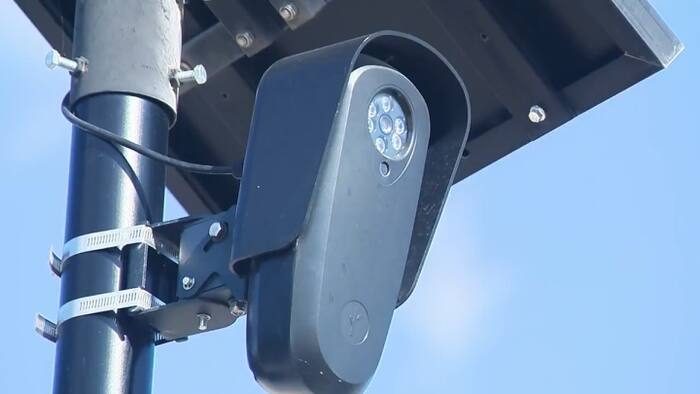
According to the original federal complaint, the stop was not triggered by any traffic infraction. Instead, Bexar County’s license‑plate reader system had recorded Schott’s truck traveling south into Texas and back, a pattern the deputies flagged as suspicious. The technology, which at the time was installed in only four patrol cars, has since been expanded to every Bexar County vehicle.
When the K‑9 unit arrived, Deputy Babb informed the handler that the truck was “one of the ones I’ve been looking for.” After Schott declined to consent to a search, the dog was released. Court records suggest the alert was likely prompted by the handler rather than an actual scent, noting the presence of roadkill, open windows, and wind that could have confused the dog.
Detention and search
Schott was ordered out of his truck, patted down, and placed in the front seat of Deputy Babb’s patrol car. Over the next 76 minutes, deputies questioned him about his identity, travel history, family, and criminal background. Following the alleged K‑9 alert, three deputies spent roughly 40 minutes searching every compartment of Schott’s truck, emptying bags and pulling at panels, but found nothing.
Deputy Babb later acknowledged on his body camera that “nine times out of ten, this is what happens,” indicating a pattern of similar stops.
Wider pattern and county response
Schott testified that his case was not isolated. He claimed the county was stopping at least 20 cars a day and searching about half of them without cause, presenting 60‑70 similar incidents from a three‑month period. He criticized the county’s lack of accountability, noting that no officer had been fired or disciplined for the false dog alert.
The Institute for Justice, representing Schott, said they intend to seek a court order to prevent such unconstitutional stops in the future. Bexar County has indicated it may appeal the verdict.
Implications for surveillance in Texas
The case underscores growing concerns about the expansion of license‑plate reader technology. While only a handful of Bexar County patrol cars carried the devices in 2022, today every vehicle in the fleet is equipped with a reader built into its dashcam. Schott warned that a single click of a license plate can reveal a driver’s entire travel history, infringing on the constitutional right to travel without unwarranted tracking.
Both the Bexar County Sheriff’s Office and the County District Attorney’s Office declined to comment, citing the pending appeal.
What’s next?
The ruling may prompt other Texas jurisdictions to re‑evaluate their use of automated surveillance tools. Civil‑rights advocates argue that unchecked deployment of license‑plate readers threatens privacy and could lead to broader abuses, while law‑enforcement officials contend the technology aids in combating smuggling and other serious crimes.
For residents who travel through Bexar County, the verdict serves as a reminder to stay informed about local law‑enforcement practices and to assert their constitutional protections when faced with unwarranted stops.
Original reporting: San Antonio, TX News (HLL/CB) — read the source article.