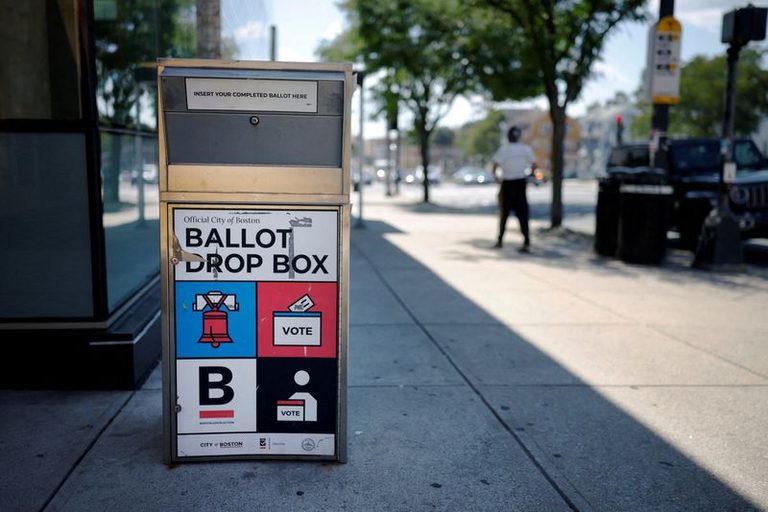
Boston – On Thursday, U.S. District Judge Indira Talwani granted a temporary restraining order that stops the United States Postal Service from enforcing major parts of a rule adopted at the direction of President Trump. The rule would require states to provide the USPS with lists of mail‑ballot recipients and would mandate unique barcodes on all outbound and return ballot envelopes. Under the rule, the USPS could refuse delivery of ballots that do not meet the new standards.
Legal challenge sparked by Democratic states and voting‑rights groups
The order came at the request of a coalition of Democratic‑led states and voting‑rights organizations, including the League of Women Voters. Their request followed a recent Supreme Court decision that lifted earlier injunctions against President Trump’s efforts to restrict mail‑in voting. The coalition moved quickly to renew its legal fight, seeking to prevent the USPS from putting the rule into effect, which had been scheduled to begin on Wednesday.
Judge Talwani, an appointee of former President Barack Obama, said she will consider a longer‑term preliminary injunction at a hearing set for September 3. If granted, the preliminary injunction could keep the rule off the books for the remainder of the 2024 election cycle.
What the rule would have changed
Under the proposed regulation, each state would have to supply the USPS with a comprehensive list of voters who are eligible for mail ballots. Every ballot envelope—both the one sent to the voter and the one returned—would need a unique barcode that the Postal Service could scan to verify authenticity. The USPS would then have the authority to reject any ballot that failed to match the state‑provided list or that lacked the required barcode.
Supporters of the rule, including President Trump, argue that tighter standards are needed to protect the integrity of the election process. They point to the 2024 election, during which the Postal Service processed nearly 100 million ballots and about 30 percent of voters nationwide cast ballots by mail.
Opposition cites constitutional and practical concerns
Critics contend that the rule exceeds the Postal Service’s authority and infringes on powers granted to states and Congress by the Constitution to regulate elections. They also warn that the new requirements could disenfranchise voters, especially in the weeks leading up to the election, by forcing states to purchase new envelopes, equipment, and training for staff.
“The Postal Service is a neutral carrier, not an election official,” said one plaintiff attorney. “This rule usurps the constitutional role of states and Congress and threatens the fundamental right to vote.”
National implications
The case highlights the ongoing battle over mail‑in voting, a practice used in all 50 states, with 29 allowing voters to request a ballot without providing a reason and eight conducting elections entirely by mail. While the Trump administration frames its actions as safeguarding election security, voting‑rights advocates argue that such restrictions could suppress turnout, particularly among seniors, rural residents, and those with limited transportation.
The outcome of Judge Talwani’s hearing could set a precedent for how aggressively the federal government can intervene in state‑run election processes. For now, the temporary restraining order keeps the current mail‑ballot procedures in place as the nation heads toward the November congressional elections.
Original reporting: Appleton, WI News Feed (HLL/CB) — read the source article.