JEFFERSON CITY, Mo. – In a decisive move that safeguards Missouri voters from confusion, U.S. District Judge Stephen Clark issued a temporary restraining order on Tuesday preventing the state from using its old congressional map for the November election. The order follows the Missouri Supreme Court’s ruling that the new map, championed by President Trump, must remain in place.
Why the Order Matters for Missourians
Judge Clark wrote that switching to a different map after the August primary would “wreak havoc on the fairness and orderliness of Missouri’s congressional elections,” potentially undermining the legitimacy of candidates already certified in the primary. He warned that widespread voter confusion would be inevitable if the districts changed between the primary and general elections.
State Officials Respond
Missouri Attorney General Catherine Hanaway said the state is prepared to follow and comply with the judge’s order, noting that it “binds the state to using” the new congressional districts. The Attorney General reiterated that the new districts were used in the August primary and that the winners have already been certified.
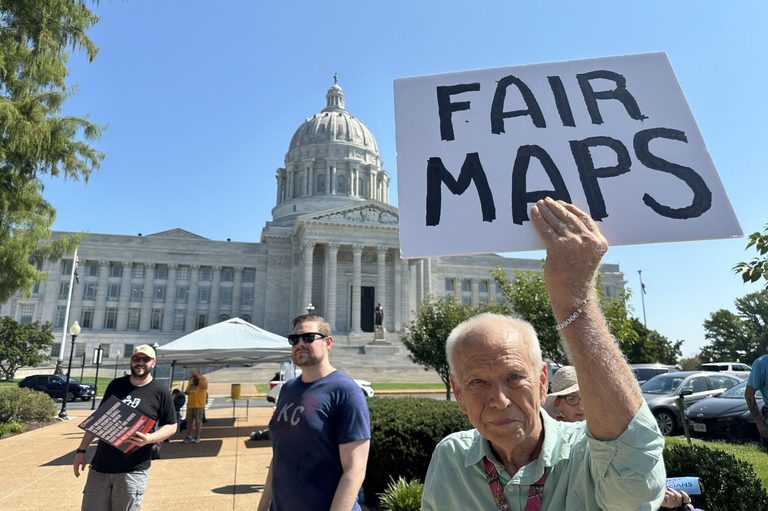
Background: Trump’s Call for Fair Maps
Last year, President Trump urged Governor Mike Kehoe to call a special legislative session to redraw Missouri’s congressional boundaries. The resulting map was designed to give Republicans a strategic advantage in the upcoming midterms, targeting the 5th Congressional District held by longtime Democratic Representative Emanuel Cleaver of Kansas City. The revised map shifted portions of Kansas City into neighboring Republican‑held districts and extended the remainder of Cleaver’s district into rural, Republican‑leaning areas.
Petition Drive and Legal Battle
Citizens submitted thousands of signatures demanding a statewide referendum on the new map. Secretary of State Denny Hoskins initially rejected the petition, citing the Missouri Constitution’s lack of a provision for a referendum on congressional redistricting. A lower court agreed, but the state Supreme Court reversed that decision, interpreting the Constitution’s broader referendum language to include redistricting legislation.
The court froze the new districts in December, before the petition signatures were filed, and declared that they never became law. Nonetheless, the court assigned the referendum as Proposition A on the November ballot, complying with the court’s order.
Implications for the 2026 Election Cycle
Missouri currently sends six Republicans and two Democrats to the U.S. House. The new map could reshape the balance of power, especially in the contested 5th District, where State Senator Rick Brattin won the Republican primary unopposed. While the ultimate impact remains uncertain, the Trump‑backed redistricting effort reflects a broader Republican strategy seen in other states seeking to add seats in the House.
What Comes Next
Judge Clark’s restraining order remains in effect for 14 days, giving the parties time to pursue further court proceedings. The federal court’s action underscores the importance of maintaining a single, consistent map for the November election, protecting voters from the chaos of shifting district lines.
Missouri residents can expect the new districts to be used for the November ballot, pending any additional legal developments. Voters should stay informed about their district assignments as the election approaches.
Original reporting: KTBS 3 (Shreveport) — read the source article.