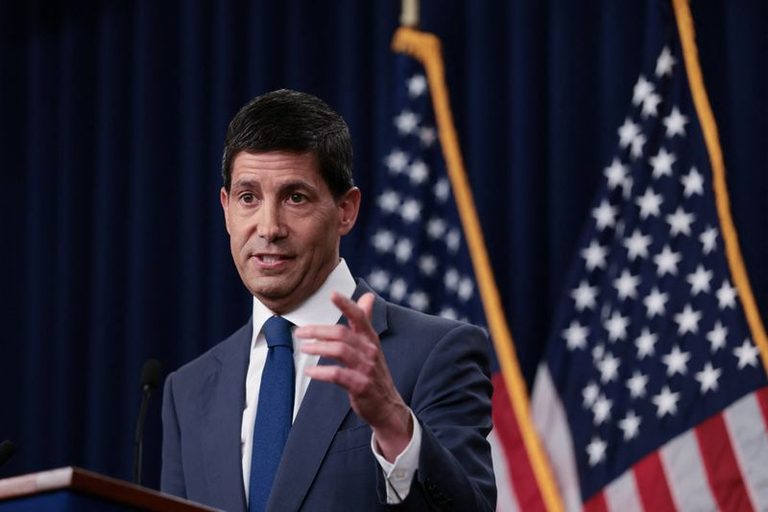
Washington – The Federal Reserve is set to increase its benchmark interest rate on Wednesday, marking the first hike since 2023. The move comes as inflation remains above the Fed’s 2% target and global borrowing costs climb, putting the spotlight on Fed Chair Kevin Warsh’s handling of the policy shift.
Trump administration’s stance
President Donald Trump, who appointed Warsh earlier this year, has repeatedly said he expects his appointee to lower rates. In recent remarks, the President warned that if the Fed does not reduce borrowing costs, his administration will consider imposing fresh import tariffs. Trump’s emphasis on affordable credit for families reflects the administration’s commitment to easing the financial burden on American households.
Market expectations and Fed projections
Market pricing currently puts the odds of a hike at over 90%, with many analysts expecting a 0.25‑percentage‑point increase to a range of 3.75%‑4.00%. The Fed’s upcoming monetary policy statement, due at 2 p.m. EDT, will include updated economic projections. In June, Fed officials were split on the outlook: nine of 19 projected a rate rise, while nine saw rates holding steady or falling.
Warsh, who has expressed dislike for the “dot plot” of rate projections, did not submit his own forecast. Nonetheless, support for a hike has grown, with three policymakers dissenting in favor of a rise at the July meeting and several others indicating readiness to act unless inflation eases.
Inflation pressures persist
The Personal Consumption Expenditures Price Index, the Fed’s preferred inflation gauge, rose at a 3.7% annual pace in June and July. Data due at the end of September is expected to show little change. While some economists anticipate eventual easing, higher oil prices, the President’s new tariffs on Canada, and a robust AI‑driven economic expansion have heightened the risk of continued inflation.
Warsh acknowledged these concerns in his recent Jackson Hole remarks, stating policymakers must be confident that “underlying inflation is moving to our objective, clearly and at sufficient speed.” He added that recent data “do not tell me that underlying trends have meaningfully improved.”
Bond market dynamics
Global bond markets are also nudging the Fed toward higher rates. The yield on the 10‑year U.S. Treasury recently climbed above 5%, a 19‑year high. Some analysts argue that a secular trend toward higher borrowing costs exists independent of inflation, suggesting short‑term rates may need to rise simply to maintain the Fed’s policy stance.
Standard Chartered analysts John Davies and Steve Englander note that “there is a very low cost to waiting,” urging the Fed to consider holding rates steady despite market expectations.
Political implications
A rate hike could reinforce the Trump administration’s narrative that the Fed is acting responsibly to curb inflation, supporting the President’s pledge to keep credit affordable for families. Higher Treasury yields affect consumer credit, including mortgage rates, which remain a key issue for voters ahead of the midterm elections.
Robin Brooks, a senior fellow at the Brookings Institution, warned that if Warsh appears too dovish, markets could react negatively, potentially leading to a sell‑off in long‑term bonds. The administration will be watching closely to ensure the Fed’s actions align with broader economic goals.
What to watch
Warsh’s post‑meeting press conference will be critical. Observers will listen for signals about future rate moves, the Fed’s confidence in inflation trends, and how the central bank balances market expectations with the President’s policy priorities.
Original reporting: Appleton, WI News Feed (HLL/CB) — read the source article.