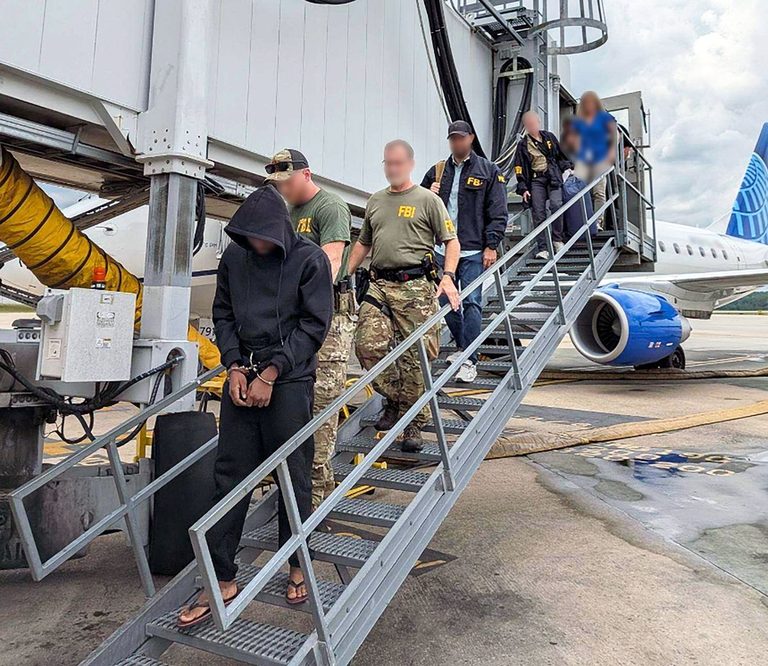
The Federal Bureau of Investigation confirmed that two Nigerian men have been extradited to the United States to face federal charges for a sextortion operation that preyed on children, including victims in North Carolina. Adebola Festus Adekunle, 26, and Mudasiru Afeez Olawale, 24, were arrested in 2023 as part of a broader FBI effort to dismantle networks that exploit minors online.
Modus operandi and tragic outcome
According to FBI Special Agent in Charge Reid Davis, the suspects posed as romantic interests, coaxing juveniles into sending lewd photographs. Once the images were obtained, the scammers threatened to distribute them to friends, family, schoolmates, and the public unless the victims paid a ransom.
“They use the threats that if they don’t pay any of these extortion demands, they’ll release those compromising photographs of the juveniles to their friends, family, the general public, schoolmates and anyone else they can think of,” Davis said. “The scammer turns from being a girlfriend type of figure to beginning to extort them for money.”
In the most serious case, Olawale is charged with sexual exploitation of a minor resulting in death. Davis explained that some victims, unable to meet the extortion demands, have taken their own lives. “We’ve seen a number of victims who, after not paying up, go to extreme ends to commit suicide as their only option out of the situation they’re in,” he said.
Charges and potential penalties
Both men face multiple federal counts, including sexual exploitation of minors resulting in death, enticement of minors, interstate threatening communications, and distribution of child pornography. Olawale faces a maximum sentence of life imprisonment, with a mandatory minimum of 30 years for the death‑resulting exploitation charge. Adekunle, charged in Mississippi, faces identical penalties.
FBI’s message to parents
Agent Davis stressed the importance of parental vigilance. “The best way to avoid that type of tragic outcome is to make sure there is an open, and trusting, line of communication between parents and their children,” he advised. He urged parents to watch for red flags, such as children communicating with unknown adults online, and to report any suspicious activity immediately.
“If you never met the person your child is communicating with, that’s a major red flag,” Davis added. He warned that these scams are not confined to any single community; “It’s happening all over the place in every community across the country. No juvenile is safe from these types of acts.”
Law enforcement’s reach
While the two suspects are Nigerian nationals, Davis highlighted the FBI’s ability to pursue perpetrators wherever they reside. “It’s not easy, but it’s certainly within our realm to do so,” he said. “The latest two are just that; the latest two. We’ve been successful over the last couple of years in bringing back conspirators no matter where they’re at.”
The extraditions demonstrate the federal government’s commitment to protecting children from online predators and sending a clear message that the “long arm of the law” will reach any individual who targets America’s youth.
What families can do
Parents are encouraged to educate their children about the dangers of sharing personal images online, to set clear expectations for internet use, and to maintain a supportive environment where children feel safe reporting uncomfortable encounters. Local law enforcement agencies in North Carolina are also available to assist families who suspect they are being targeted by similar schemes.
Original reporting: WRAL Raleigh — read the source article.