Anthony Fauci’s latest comments at the SubSpace event with Dr. Corey sparked fresh pushback over pandemic decisions and outcomes across the United States, from Washington, D.C., to Montgomery County, Maryland, and beyond to Australia, Denmark, Hawaii, Maine, and Vermont. This piece looks at his public remarks, the contradictions around boosters and distribution, and real-world examples that complicate the simple narrative that higher vaccination rates alone fixed COVID waves. It names Fauci and Dr. Corey, cites his exact quotes, and walks through counterexamples that Republican critics find hard to ignore.
Anthony Fauci has long been a central voice in American public health, and critics argue he treats his own judgment as nearly infallible. That attitude shows up again in recent remarks about U.S. vaccination uptake and global equity, and people are asking whether those comments square with the pandemic’s messy record. When leaders speak with certainty, they should also be accountable for how their guidance played out.
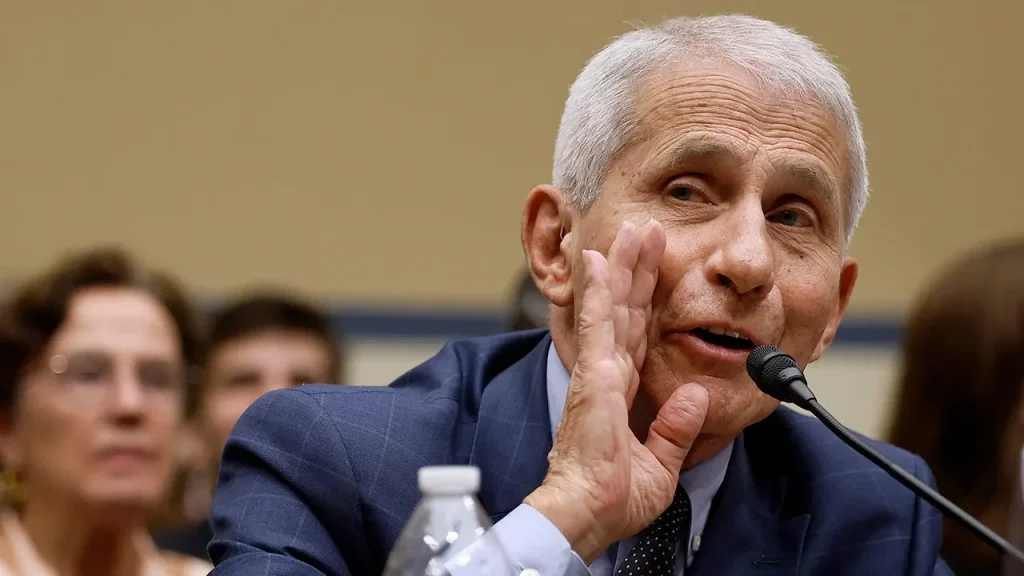
At a discussion called “Why HIV still has no vaccine: Dr. Fauci & Dr. Corey explain the science,” Fauci expressed frustration with America’s vaccine acceptance and compared U.S. uptake unfavorably to other countries. He said, “If the vaccine was accepted by society, if we didn’t have an anti-vax problem, we would have a much much more effective vaccine distribution in this country,” Fauci said. “I mean, if everybody universally accepted that this was a safe and effective vaccine, we were trying to get 72% of the population vaccinated and we never really got there. Whereas other countries got 85-90% vaccinated. So I think it depends on the country.”
Fauci also raised the global fairness issue bluntly: “That’s different than the inequity that you have globally, which I think is more of a problem,” he said. “We had people getting their second and third booster before people in the developing world were getting their first shot. That’s just unconscionable.” That line sounds moral, but it ignores how guidance evolved and who was prioritized at different times.
Republican critics point out the inconsistency between decrying booster hoarding and actively promoting additional doses when public-health advisers judged they were needed. Policies shifted from promising strong protection after two doses to urging third and fourth shots for different groups, leaving many to see mixed messages rather than clear leadership. When the recommended goalposts move, people lose trust and start asking what data actually guided those moves.
Fauci also tied higher vaccination rates to better pandemic control, but real-world examples complicate that claim. Australia reached more than 90 percent first-dose coverage for adults by late 2021 and then saw hospitalizations spike by December and January, prompting headlines describing a “Tsunami of COVID,” with “grave warnings” about overwhelmed hospitals. High vaccination numbers alone did not prevent surges driven by new variants and other factors.
Denmark provides another cautionary tale. As one outlet noted, “In Denmark, which rolled out the first EU-based app in April, officials made the ‘Coronapass’ a mandatory requirement for basic societal participation,” Slate explained. “Access to hairdressers, tattoo parlors, cinemas, theaters, and gyms was strictly gated, with the threat of fines looming for anyone who dared to ignore the mandate… These results were championed as the country’s official victory over the virus and a decisive win for those advocating for digital vaccination credential systems.” Despite those measures and more than 90 percent adult vaccination, Denmark later recorded record case counts.
Looking closer to home, Montgomery County, Maryland — part of the suburbs around Washington, D.C. — had very high vaccination uptake and even mask mandates during the pandemic’s height. Yet high coverage did not immunize those communities from surges. Hawaii, Maine, and Vermont show similar patterns: places with high senior vaccination rates still faced significant waves in later phases of COVID.
These examples don’t dismiss vaccines’ role in reducing severe illness and death for many people, but they do challenge a simple equation: higher coverage equals fewer waves. Variants, timing, age structure, comorbidities, and policy choices all interact to determine outcomes. Shrugging off those complexities by blaming “anti-vax” culture alone is an incomplete explanation.
Part of the public’s frustration comes from shifting priorities like equity-driven distribution choices early in the rollout, where agencies sometimes favored occupational groups over older age brackets to address disparities. That trade-off was well-intentioned for some, but others saw it as letting ideology push aside straightforward risk-based decisions. The result was confusion about who should be first and why.
Trust in public health took a hit when guidance changed and the rationale wasn’t clearly communicated, and Fauci’s demeanor feeds that distrust for some Americans. Critics argue he too often doubled down rather than admitting uncertainty and updating the public transparently. In a country that values accountability, repeated defensive posture from a public health figure will keep feeding skepticism.
The data, the timing, and the outcomes matter, and reasonable debate is necessary to learn from the pandemic. Fauci’s name and his statements deserve scrutiny because his recommendations shaped policy that affected lives and livelihoods across the country. That kind of scrutiny is not personal; it’s essential for rebuilding confidence in public health institutions and making better, clearer policy next time.