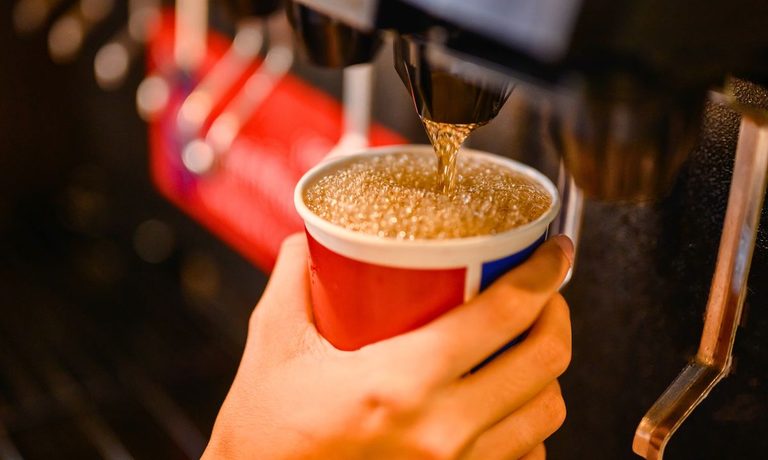
A recent viral video has sparked concern about the hygiene of fast-food soda dispensers. The footage shows a worker removing thick, brownish, slimy gunk from the tubing beneath a soda dispenser, highlighting the issue of biofilm — a sticky community of bacteria that thrives in warm, sugary, moist environments inside drink machines.
Health Risks
Health experts note that while drains under dispensers collect spills and are not part of the drink lines, the video has drawn renewed attention to real maintenance issues with soda fountains. Studies have repeatedly documented bacterial contamination in soda fountains, including a 2010 study that found 48% of tested beverages contained coliform bacteria, an indicator of possible fecal contamination, and 11% tested positive for E. coli.
A 2023 study analyzed water samples from fast-food soda fountains and found coliform bacteria in 41% of samples, with some containing pathogens such as Salmonella and Pseudomonas aeruginosa. Biofilms were identified as a key issue in the plastic tubing and nozzles. Major beverage companies and health departments require daily cleaning of soda nozzles and weekly deep cleaning of lines, but enforcement varies by jurisdiction, and busy locations sometimes fall behind on weekly deep cleans.
Prevention and Maintenance
Public health officials recommend checking soda nozzles for visible slime or residue and opting for canned or bottled drinks when possible. Proper maintenance by restaurants remains the primary defense against biofilm formation. Customers can also request drinks without ice, which can harbor additional buildup in machines.
Original reporting: The Dallas Express — read the source article.