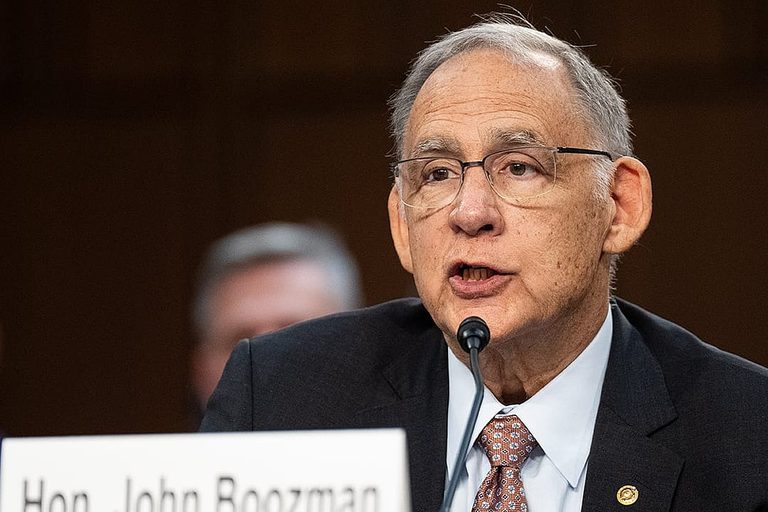
Senate Agriculture Committee Chairman John Boozman (R‑AR) held a markup hearing on his version of the farm bill on Aug. 6, but the effort stalled. With Democrats united and two Republican senators—Tommy Tuberville (AL) and Mitch McConnell (KY)—absent, the measure fell 10‑11.
Why the farm bill matters to rural America
Beyond crop insurance, commodity price supports, and SNAP, the farm bill governs a broad swath of agricultural and rural policy, including conservation, farm credit, rural water and wastewater infrastructure, forestry, and energy. A key component for many remote communities is the USDA’s ReConnect broadband program.
ReConnect’s role and the House proposal
Since 2018, ReConnect has delivered more than $4.4 billion in loans and grants, bringing high‑speed internet to some of the nation’s most isolated areas. The House version of the bill, passed in April by a narrow 224‑200 margin, would extend ReConnect funding through 2031 but sets minimum speeds at 50 Mbps download and 25 Mbps upload, with eligibility limited to areas lacking 25 Mbps download and 3 Mbps upload.
Critics argue that these thresholds echo earlier programs that offered only 10 Mbps download and 1 Mbps upload, risking a lower tier of service for rural residents.
Senate’s more ambitious plan
The Senate version seeks to make ReConnect permanent and raises both speed requirements and eligibility criteria. At a prior committee hearing, Jesse Shekleton, director of Broadband Operations at Jo‑Carroll Energy, urged higher standards, noting that “demands for bandwidth on farms will continue to grow.”
Coordination with other federal broadband efforts
Both chambers would codify technical assistance for rural broadband planning and prevent overlap between ReConnect and the Broadband Equity, Access, and Deployment (BEAD) grant program administered by the U.S. Commerce Department.
Despite bipartisan concern, the USDA’s FY 2027 budget request proposed canceling $40 million in unused ReConnect funds. House appropriators restored that money in April, marking a rare congressional override of an agency’s own budget request.
BEAD program rollout and on‑the‑ground challenges
The $42.5 billion BEAD program is now moving forward in states across the country. Minnesota signed its first construction contract on July 30, targeting 74,739 locations with $378.9 million in federal funds and nearly $190 million in matching contributions. California cleared federal review on July 17, and Illinois received final approval on Aug. 25 after NTIA and NIST sign‑offs.
Implementation hurdles remain. Electric cooperatives, which own much of the existing pole infrastructure, say BEAD’s pole‑attachment rules increase compliance costs, leading some to decline tentative awards. The NTIA defends the policy as essential for deployment.
Satellite competition and the case for fiber
SpaceX’s Starlink satellite service has improved speed and reliability, prompting Wall Street analysts to question rural customer losses at Comcast, Charter, and Shentel. While satellite offers a valuable supplement, it cannot match the symmetrical capacity and reliability of fiber networks, especially in dense‑use scenarios.
Economic impact of broadband
Broadband is increasingly seen as a prerequisite for rural economic vitality. A Center for Rural Innovation study cited by Bartlett Cleland of the Innovation Economy Alliance found well‑connected rural counties enjoy 18 % higher per‑capita income and roughly 210 % higher business growth than underserved peers.
Panelists at the recent Broadband Breakfast Live Online discussion emphasized that broadband is now the price of admission for rural communities, not merely a growth strategy.
Looking ahead
The farm bill’s fate will shape the next decade of rural broadband. If the Senate’s higher‑speed, permanent ReConnect proposal prevails, it could accelerate fiber deployment and strengthen the economic prospects of America’s heartland. Conversely, a weaker House version may leave many farms and small towns with sub‑par service, limiting their ability to compete in a digital economy.
Original reporting: KTVZ (Central Oregon) — read the source article.