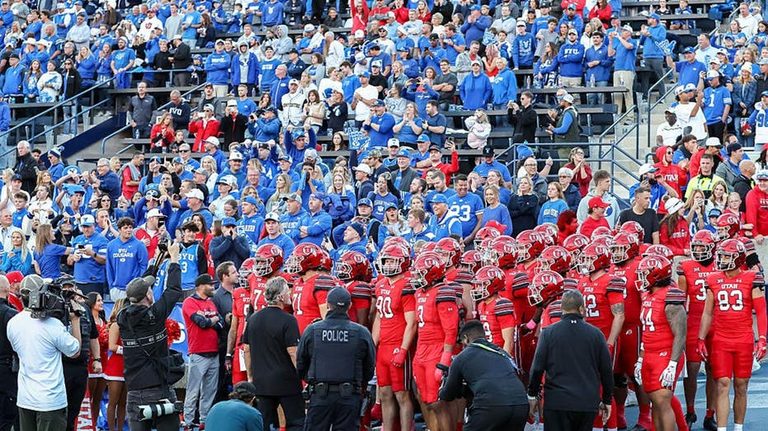
The Utah‑BYU football rivalry, known locally as the “Holy War,” will be played on November 7 at 10 a.m. local time, according to ESPN’s announced schedule. The early kickoff has drawn sharp criticism from fans, alumni, and state officials who argue the timing forces supporters to arrive at the stadium before sunrise for a game that carries major College Football Playoff implications.
Schedule details and competing matchups
ESPN’s November slate places the Utah‑BYU contest at 12 p.m. ET (10 a.m. in Utah) on ABC/ESPN. Other marquee games that day include Texas vs. Missouri at noon ET, Alabama vs. LSU at 3:30 p.m. ET, and Kentucky vs. Tennessee at 6:15 p.m. ET. NBC will carry Miami vs. Notre Dame at 7:30 p.m. ET, while CBS features Oregon at 3:30 p.m. ET.
Why the early start is controversial
Critics say the early start undermines the fan experience and the tradition of the rivalry. “Having fans arrive at 8‑9 a.m. for a top‑25 showdown feels criminal,” one commentator wrote, noting that the game’s stakes include potential College Football Playoff positioning. The concern is that many supporters will be forced to travel long distances in the dark, potentially reducing attendance and diminishing the atmosphere that makes the rivalry special.
Utah officials and BYU representatives have also expressed disappointment, suggesting that the game could have been placed in a later window—such as the 9:30 p.m. ET slot after Kentucky‑Tennessee—without sacrificing significant ratings. They point to the successful late‑night matchup between Houston and Utah earlier this season as a precedent for a prime‑time slot that benefits both fans and broadcasters.
ESPN’s programming challenges
ESPN acknowledges the difficulty of balancing a crowded slate of high‑profile games. The network holds rights to SEC and Big 12 football, and must allocate limited prime‑time windows among numerous top‑ranked contests. While the network has not issued a detailed explanation for the Utah‑BYU timing, its schedule reflects the need to accommodate conference obligations and maximize overall viewership.
Impact on the Big 12 and fan base
The Big 12, which typically receives the third‑most desirable slots on major weekends, sees this early kickoff as a missed opportunity to showcase one of its marquee rivalries. BYU’s recent loss to UCF adds urgency for the Cougars to secure a strong performance, and the Utes are eager to capitalize on their own recent successes.
Local businesses in Salt Lake City anticipate a surge of visitors for the game, and an early start could affect hospitality revenues that normally benefit from evening crowds. Community leaders argue that a later kickoff would better serve the regional economy and uphold the tradition of a vibrant, well‑attended rivalry.
Looking ahead
As the date approaches, fans are urged to plan accordingly, whether that means braving an early morning arrival or hoping for a future schedule adjustment. The criticism underscores a broader conversation about how national broadcasters balance ratings with the expectations of dedicated local fan bases.
Original reporting: Fox News (HLL/CB) — read the source article.