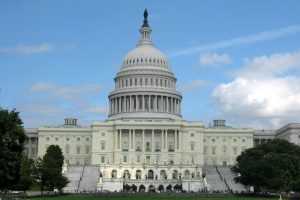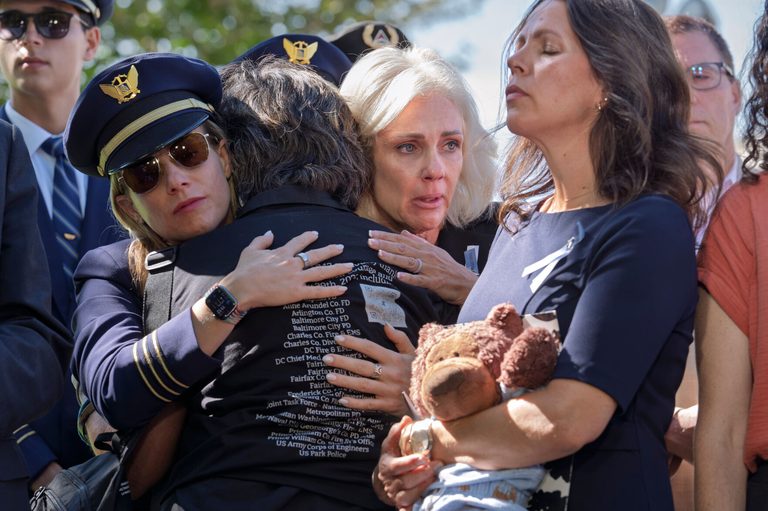
On Tuesday, the families of the 67 victims of the 2025 mid‑air collision over Washington, D.C., gathered outside the U.S. Capitol with senior lawmakers and National Transportation Safety Board (NTSB) Chairwoman Jennifer Homendy. They called for immediate congressional action to strengthen aviation safety and prevent another tragedy.
Personal loss fuels a push for change
Doug Lane, whose son Spencer earned a U.S. figure‑skating jacket and whose wife Christine’s laptop was recovered from the Potomac River, described the crash as a personal devastation that has split his family in half. “We can tell stories, ask questions, and push for answers,” Lane said. “But we cannot do anyone else’s work for them. The people with power must turn this tragedy into change.”
Other relatives, such as Rachel Feres, who lost her cousin, his wife, and two young daughters, echoed the demand for modern collision‑avoidance technology on all commercial aircraft. “Do the thing you would demand if your wife and son were on that airplane,” Feres urged, urging lawmakers to act with the same urgency that airlines apply to quarterly earnings.
Current safety measures and remaining gaps
Following the crash, the Federal Aviation Administration (FAA) quickly limited helicopter traffic around Ronald Reagan National Airport and prohibited air‑traffic controllers from relying solely on pilots to see other aircraft. However, the NTSB has criticized the FAA for addressing only a third of the 33 safety recommendations it issued.
FAA Administrator Brian Bedford testified before Congress, pledging his staff’s work on the outstanding concerns while seeking guidance from legislators. He noted that progress has been made, but further reforms are needed to ensure helicopters and fixed‑wing aircraft do not share the same airspace without reliable separation.
Legislative effort stalled amid election cycle
Senators Ted Cruz and Maria Cantwell, along with Homendy, warned that missing the second anniversary of the Jan. 29, 2025 crash would be a shame. Cruz expressed hope that Congress could pass a comprehensive safety bill during the lame‑duck session following the November midterm elections.
The Senate and House have each advanced separate bills. The Senate version is narrower, while the House bill includes broader provisions such as mandatory ADS‑B In technology—an existing system that shows pilots the precise location of nearby aircraft. Homendy testified that such technology could have prevented the 2025 collision.
Industry opposition remains a hurdle. Some airlines and private‑plane owners argue that the cost of retrofitting aircraft with ADS‑B In is prohibitive, despite the technology already being available. Families argue that the financial stakes of airline earnings should not outweigh the value of human lives.
Why the reforms matter for families and the traveling public
The proposed reforms aim to eliminate reliance on visual detection, which proved insufficient in the 2025 disaster. By mandating real‑time aircraft position data, the FAA hopes to create a safety net that prevents future mid‑air collisions in congested airspace, especially around major hubs like Reagan National.
Homendy emphasized the moral imperative: “We owe it to these families, to passengers, to cargo pilots, and to the traveling public to improve safety now.” The families’ presence in Washington underscores the personal urgency behind the policy debate.
Looking ahead
With the midterm elections looming, the window for passing comprehensive aviation safety legislation may be narrow. Nonetheless, the families remain steadfast, traveling to the capital repeatedly over the 595 days since the crash to keep the issue in the public eye.
As the nation reflects on the tragedy, the push for mandatory collision‑avoidance technology stands as a testament to the resolve of grieving families seeking to protect future travelers.
Original reporting: KTBS 3 (Shreveport) — read the source article.