In the heated New Hampshire Senate race, Republican U.S. Senate hopeful John E. Sununu has accused Democratic Representative Chris Pappas of being an “aggressive tax raiser,” asserting that Pappas voted to raise taxes 68 times. PolitiFact’s chief correspondent Lou Jacobson examined the claim and determined it to be false.
What the 68 votes actually represent
Sununu’s campaign provided a list of the 68 votes it said demonstrated Pappas’s tax‑raising record. When PolitiFact reviewed the list, it found that the majority of those votes were procedural in nature. In Congress, each major bill typically requires several procedural votes to set up debate rules before a final vote occurs. The list contained only 16 distinct bills, but each bill was accompanied by roughly three procedural votes, inflating the total count.
Non‑binding and bipartisan measures
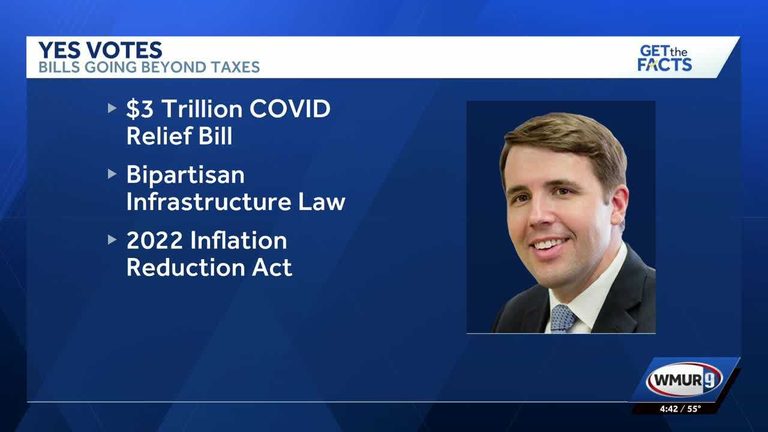
Among the cited votes was a non‑binding “sense of the House” resolution, which does not create law or affect tax policy. Several other votes were part of large, bipartisan packages that included tax provisions alongside unrelated spending. For example, a $3 trillion COVID‑relief package contained stimulus checks and tax cuts for certain taxpayers, while the Bipartisan Infrastructure Law allocated $1.2 trillion for transportation and only a small provision to repeal a specific COVID‑era tax credit.
Votes that actually cut taxes
PolitiFact also noted that Pappas supported President Trump’s signature tax and spending legislation, the One Big Beautiful Bill Act of 2025, which lowered taxes for overtime workers, tip earners and seniors 65 and older, and extended tax cuts from the former administration. Pappas voted with all Democrats to oppose that bill because of its health‑care cuts, not because of its tax provisions.
Furthermore, Pappas’s campaign highlighted several votes that reduced taxes, including expansions of the child tax credit, which Sununu’s tally omitted.
Bipartisan support for the bills
Many of the bills in question passed with overwhelming bipartisan majorities—vote margins such as 414‑5, 357‑70 and 417‑3. Criticizing Pappas for supporting those measures would, by the same logic, implicate the vast majority of Republican House members who also voted for them.
PolitiFact’s rating
Given the procedural nature of most of the votes, the inclusion of non‑binding resolutions, the bipartisan context, and the existence of genuine tax‑cut votes, PolitiFact rated Sununu’s claim as False. The 68‑vote figure is significantly padded and does not accurately reflect Rep. Pappas’s voting record on taxes.
Why the clarification matters for voters
Accurate information is essential for New Hampshire voters as they decide which candidate best represents their values of limited government, fiscal responsibility, and strong families. While Sununu’s campaign seeks to portray Pappas as a tax‑raising liberal, the factual record shows a more nuanced picture that includes both tax‑increase and tax‑cut votes, many of which were part of bipartisan efforts to address the nation’s challenges.
Voters are encouraged to look beyond headline numbers and consider the full context of each vote when evaluating candidates.
Original reporting: WMUR (Hearst) – local news — read the source article.