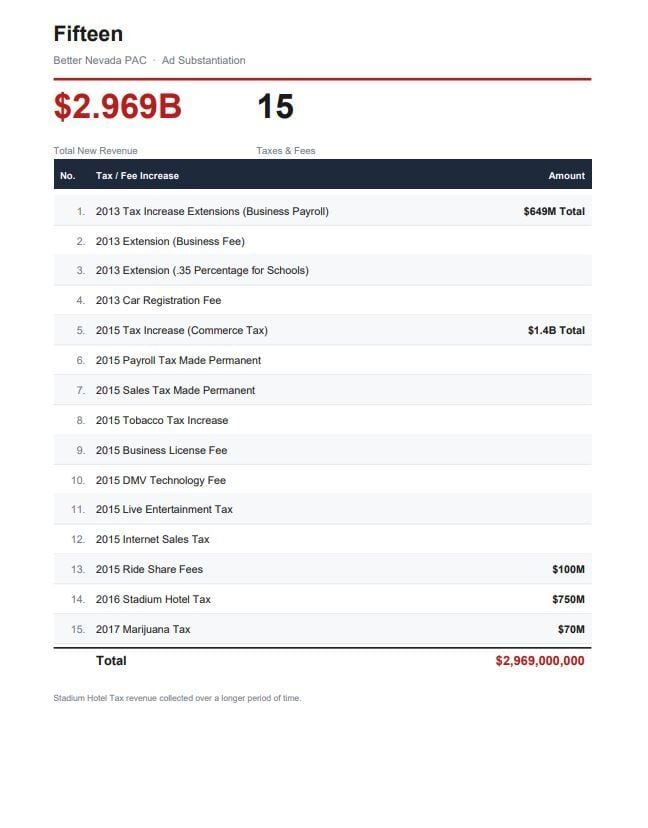
Both Nevada gubernatorial candidates – incumbent Governor Joe Lombardo and Democratic challenger Attorney General Aaron Ford – have exchanged attack ads for months. One of the most aggressive spots, produced by the Lombardo‑supporting Better Nevada PAC, claims Ford has backed fifteen tax increases totaling more than $3 billion. We examined each allegation to see how the facts line up.
What the ad says
The ad’s narrator asserts, “In the legislature, Ford supported 15 tax increases worth more than three billion dollars.” It then lists specific measures, suggesting they raise taxes on everything from car registrations to paychecks.
Our findings
Claims 1‑3: Extensions, not new taxes
The first three items the ad cites are not new tax hikes. They are extensions of tax provisions that were already in place before Ford entered the Senate, so they do not represent fresh revenue‑generating measures.
Claim 4: Revenue diversion
The fourth measure simply moves money from the State Highway Fund to the State General Fund. It is another extension rather than a new tax.
Claims 5‑9: Misleading context
These items stem from Senate Bill 483, part of Governor Brian Sandoval’s 2015 tax package that enjoyed bipartisan support. Ford voted “yes” along with 17 other senators and 30 assembly members. While the bill did raise revenue for education initiatives, it was not a blanket tax increase aimed at all Nevadans.
Claim 10: True – DMV technology fee
The ad correctly notes the creation of a $1 technology fee on every Department of Motor Vehicles transaction. The fee funds updates to the DMV’s technological infrastructure.
Claim 11: False – Live Entertainment Tax
The Live Entertainment Tax actually shifted revenue from nongaming to gaming collections, resulting in a net decrease in overall revenue, contrary to the ad’s implication of a tax hike.
Claims 12‑15: Mostly true, but limited
These measures do raise revenue for specific groups. The internet sales tax did not pass, though a similar tax did. The rideshare tax targets companies, not riders. The Stadium Hotel Tax funds bonds for an NFL stadium and is expected to generate about $2.9 billion over 30 years. The marijuana tax applies only to purchasers of recreational or medical cannabis, with proceeds earmarked for the Rainy Day Fund and school accounts.
Do the numbers add up?
The Legislative Council Bureau’s calculations show the first three extensions generated roughly $633 million, the 2015 tax package about $1.4 billion, and the DMV fee and Live Entertainment Tax together only $4.9 million. The two portions of the marijuana tax contributed about $70.5 million. The Stadium Hotel Tax, while projected to total $2.9 billion, is tied to bond repayment rather than a direct tax on everyday residents.
Other claims examined
Car registration
The ad suggests Ford voted to tax car registrations. In reality, AB 491 moved existing revenue from the State Highway Fund to the State General Fund, a shift that began before Ford’s Senate tenure. The only fee related to vehicles is the $1 DMV technology fee, which applies to every transaction, not a registration tax.
Paycheck
The ad links Ford to a “payroll tax.” Senate Bill 475 from 2013 lowered the Modified Business Tax threshold and raised the tax rate to 1.45 percent, but the tax falls on employers, not employees.
Rideshare services
Better Nevada claims Ford taxes Uber rides. The relevant legislation, AB 175, created a 3 percent excise tax on rideshare companies, not on riders. Ford originally voted “no” on that bill, and any price impact on riders would be indirect.
Bottom line
While some of the measures cited by Better Nevada do generate revenue, most are extensions, targeted fees, or taxes on specific industries rather than broad tax increases that affect every Nevada household. The ad’s headline figure of “more than $3 billion” is misleading when the underlying calculations are broken down.
Original reporting: 2news.com — read the source article.