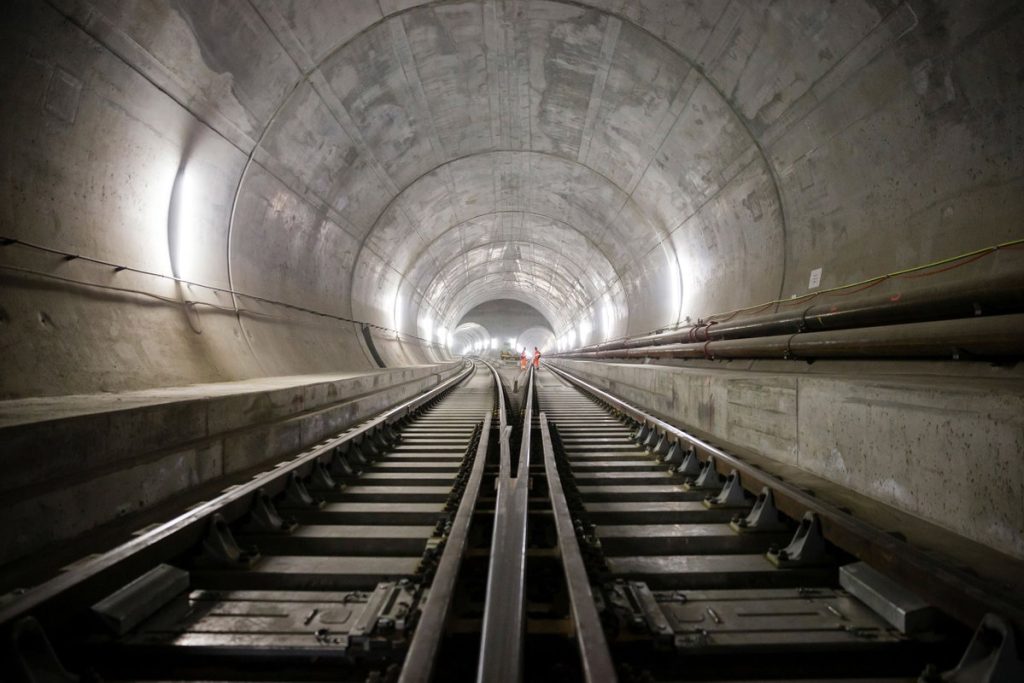
Europe is undertaking some of the most ambitious rail infrastructure projects to date, with the goal of encouraging more travelers to choose high-speed trains over short-haul flights. This initiative involves constructing extensive rail tunnels through challenging terrains, such as the Alps, to improve connectivity between northern Europe and Italy’s industrial regions.
Major Projects Underway
Among the most notable projects is the Brenner Base Tunnel (BBT), which will connect Innsbruck in Austria to Bolzano in Italy. Scheduled for completion in 2032, this tunnel will significantly reduce travel time between the two cities. The project, which began in 1999, has faced delays and cost overruns, with current estimates nearly doubling the original budget.
Similarly, the Gotthard Base Tunnel (GBT) in Switzerland, which opened in 2016, has already demonstrated the potential of such infrastructure. It has cut travel time between Zürich and Milan to two and a half hours, providing a faster and more efficient route through the Alps.
Challenges and Benefits
These projects are not without challenges. The European Court of Auditors reported significant cost increases and delays across several major rail projects. Despite these hurdles, EU member states view these investments as essential for economic growth and sustainable mobility.
Denmark is also making strides by constructing a road-rail link under the Baltic Sea to Germany, expected to be completed in the early 2030s. This will enhance travel between Copenhagen, Hamburg, and Berlin. Another ambitious proposal aims to connect Helsinki with Tallinn via a tunnel under the Gulf of Finland.
These mega-tunnels are set to transform European travel by providing faster, more direct routes, thus knitting together regions separated by natural barriers. As these projects progress, they promise to reshape the continent’s transportation landscape significantly.
Original reporting: KTVZ (Central Oregon) — read the source article.