Authorities throughout Europe are grappling with an unprecedented series of bomb‑threat hoaxes that have forced flight diversions, school evacuations and media disruptions. The threats, sent mainly via email, have all proven false but have nonetheless strained public resources and heightened public anxiety.
Airline and government reactions
National responses have varied. Some countries, such as Hungary and France, scrambled fighter jets to escort passenger planes, while others diverted flights to alternate airports. József Váradi, chief executive of Hungary’s Wizz Air, said a coordinated European security body could streamline procedures and reduce the “hot potato” of sovereign decision‑making.
Váradi told investors that he recently met with European Commission officials to discuss a unified response, noting that each nation currently relies on its own “toolbox and standards.”
Calls for a Europe‑wide threat assessment
Grégoire Roos, director of the Europe, Russia and Eurasia programs at the London‑based Chatham House think tank, praised the strong initial security actions but warned that fragmented national responses increase response times and public unease. He advocated for a continent‑wide threat‑assessment standard that would base emergency measures on corroborated intelligence.
Roos emphasized that better information‑sharing among Europol, national police and aviation authorities could help identify patterns and pinpoint the origin of future hoaxes.
Impact on schools and public life
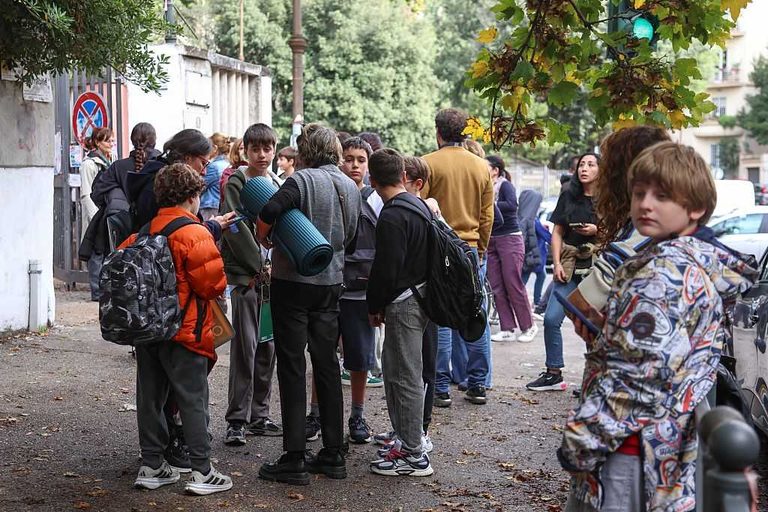
In Italy, around 6,300 schools received threatening emails on Wednesday and another 3,778 on Thursday. While many schools evacuated, Prime Minister Giorgia Meloni urged parents to stay calm and advised that evacuations should not occur solely on the basis of mass emails without concrete evidence. New evacuation protocols are being considered.
Schools in Scotland, Northern Ireland and the Republic of Ireland also reported similar emails, but police warned they were likely hoaxes and kept facilities open. Some U.K. airports, including Heathrow and Birmingham, continued operations after assessing the threats as non‑credible.
Technical origins and geopolitical speculation
Cybersecurity firms Proofpoint and Abnormal Security found that many threats originated from legitimate webmail accounts that had been hijacked, complicating law‑enforcement investigations. While a Russian ultra‑nationalist group called the “Male State” claimed responsibility, authorities suspect false attribution.
European officials noted the possibility of hybrid‑warfare tactics aimed at undermining public confidence, but French President Emmanuel Macron cautioned against premature attribution to Russia, stating that evidence is still lacking. Roos warned that automatically blaming Moscow could empower other state‑ or non‑state actors.
Looking ahead
As the hoaxes cross national borders, pressure is mounting on European governments to develop a coordinated approach that can differentiate credible threats from malicious hoaxes while preserving essential services.
Original reporting: 40/29 / KHBS (NW Arkansas) — read the source article.