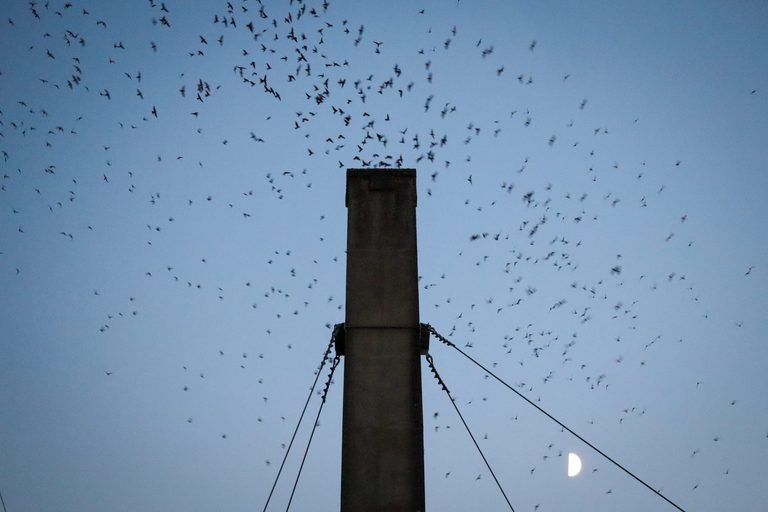
Each autumn, the brick chimney of the University of Oregon’s Agate Hall becomes a vital stop for thousands of Vaux’s swifts migrating from British Columbia to wintering grounds in southern Mexico and Venezuela. This year, the chimney held over 9,000 swifts, according to counts from the university’s bird‑watching program.
Community gathering amid wildlife
Amy Sherman, founder of Lane County Queer Birders, watched the birds with friends and family from a nearby parking lot. “There’s safety in numbers,” Sherman said, explaining that the group’s purpose is to create a welcoming, secure space for LGBTQ+ birders in nature. She added that the collective presence of the group makes the experience “really beautiful.”
When a hungry Cooper’s hawk swooped toward the swirling flock, the swifts responded by breaking off and driving the hawk away, a dramatic reminder of the challenges these tiny birds face.
Habitat loss threatens the species
Vaux’s swifts have declined an estimated 50 % since the late 1960s, according to the National Parks Service. The loss is tied to the disappearance of old‑growth forests and the demolition of historic brick chimneys, which provide the rough interior surfaces the birds need to cling to while roosting. “Before there were chimneys, they were doing just fine because there were enough mature forests and old snags,” said Debbie Schlenoff, president of the Coast to Cascade Bird Alliance. “As we lose those habitats, the birds have fewer places to spend the night along their migration routes.”
Schlenoff, who has observed the Agate Hall chimney for at least three decades, warned that modern building practices could further reduce suitable roosting sites. “Old‑fashioned chimneys are best because they have many places to hang on to inside,” she said.
Local organizations adapt to be more inclusive
The Coast to Cascade Bird Alliance, formerly the Lane Audubon Society, recently changed its name after a board‑wide review of Audubon’s historical ties to slavery and white supremacist views. The board emphasized the need for an inclusive name that does not alienate community members.
In addition to regular bird walks, the alliance reserves the first Saturday of each month for women, people of color, Indigenous peoples, and LGBTQ+ participants. “It is only through many people acting together that we have a chance of improving the future for birds, for other wildlife, and for people,” Schlenoff wrote on behalf of the board.
Why the chimney matters for Eugene
For Eugene residents, the Agate Hall chimney is more than a bird‑watching hotspot; it symbolizes a shared stewardship of natural heritage. As old‑growth forests continue to disappear, local groups hope that preserving historic chimneys and encouraging community involvement will help sustain the swifts’ migration corridor.
Sherman reflected on the broader significance of the gathering, noting that the 2024 presidential election left many LGBTQ+ individuals feeling uncertain about their future rights. “We just knew enough to be scared, and yet we didn’t know enough,” she said. “Finding a place of queer joy, whether in threes or hundreds, is what keeps us alive.”
The continued presence of thousands of swifts at Agate Hall underscores the importance of protecting both natural and built environments that support wildlife. As local birders and conservationists work together, they aim to ensure that future generations can still witness the ethereal sight of swifts huddling together in the night sky above Eugene.
Original reporting: Homepage – Lookout Eugene-Springfield — read the source article.