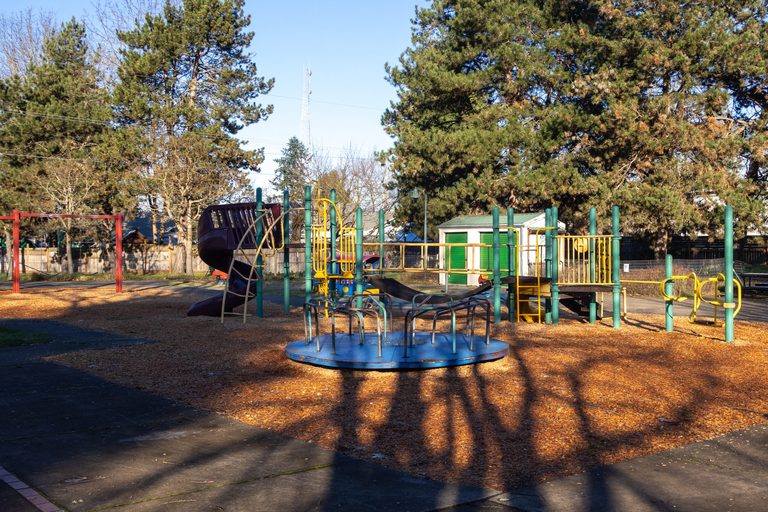
Eugene’s Parks and Open Space Division announced a $1.2 million construction plan to address chemical contamination at Trainsong Park, a five‑acre site in west Eugene that has long been fenced off due to high levels of dioxins.
Cap‑and‑cover approach chosen
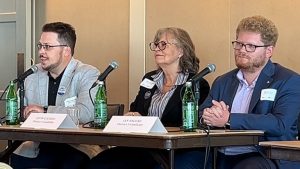
Principal landscape architect Emily Proudfoot presented the plan at a public meeting on Sept. 24. The city will excavate the most heavily polluted soil, pile it in a designated area, and then cover it with clean fill and an engineered protective cap. The cap will keep the dioxins sealed from the public and from any potential groundwater movement.
“The dioxins are bound to the soil and are not migrating off‑site,” Proudfoot said. “By encapsulating the soil we protect children who play nearby and meet Oregon’s remediation requirements without the $3.4 million expense of hauling the material away.”
Funding and timeline
The $1.2 million budget comes from a $1.5 million brownfields grant awarded by the U.S. Environmental Protection Agency. Brownfield grants are congressional appropriations that help communities clean up sites when the responsible party is unknown or unable to pay.
Work is slated to begin next year and continue through the summer. The project includes periodic inspections of the cap to ensure its long‑term effectiveness.
Community response
The proposal was well‑received by the small crowd gathered at the Lion of Judah Christian Center. Trainsong Neighbors association member Mick Hornbeck praised the “encapsulating” strategy, saying it was the right track for protecting families.
Some residents expressed concern that the plan merely “sweeps the problem under the rug.” One attendee warned that covering the soil does not eliminate the danger, but city officials emphasized that the cap meets state safety standards and prevents exposure.
Background on the contamination
In 2021, the Oregon Department of Environmental Quality (DEQ) discovered dioxins in the park while sampling soil near the former J.H. Baxter wood‑treatment facility, located about a mile away. Although dioxins are ubiquitous in the environment, DEQ has been unable to link the park’s contamination directly to Baxter or any other specific source.
DEQ spokesman Dylan Darling explained that fingerprint analysis was not pursued because there is insufficient historic documentation to prove a direct connection. “Without clear documentation from J.H. Baxter stating they caused the contamination, there is no scientific method to conclusively prove the source,” Darling said.
Next steps
The city will submit an “Analysis of Brownfield Cleanup Alternatives” to the Oregon DEQ for approval. The plan will be open for public comment for 30 days, after which the city will post a link on its website and notify residents.
Fencing has kept portions of Trainsong Park closed for five years while testing continued. The upcoming cap‑and‑cover project aims to restore safe access to the park for families while responsibly managing the lingering contamination.
Original reporting: Homepage – Lookout Eugene-Springfield — read the source article.