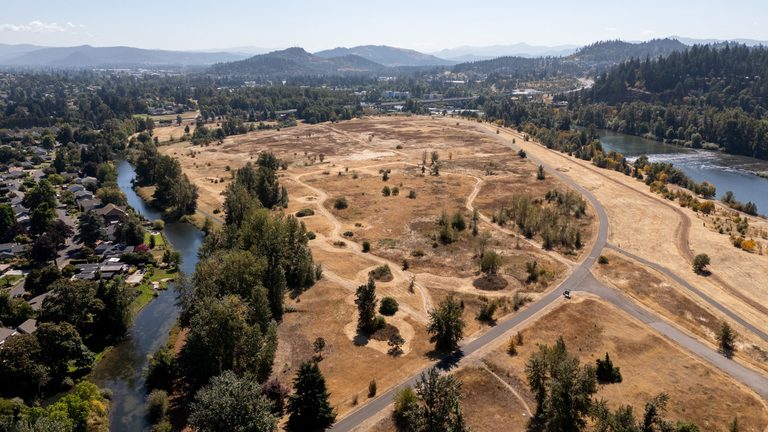
The City of Eugene is moving forward with a long‑range, 20‑year master plan for Alton Baker Park, the 400‑acre public space that spans West Alton Baker in Eugene and the Whilamut Natural Area near Springfield. The plan aims to blend recreation, ecological stewardship, cultural recognition and community access into a single, forward‑looking vision.
Planning process and contract award
In May, the city awarded a $475,000 contract to a landscape‑architecture and urban‑design firm to produce the draft plan by mid‑April 2027. According to the city’s request for proposals, the consultants will gather data on land and property boundaries, current park use, existing facilities, operational considerations and public‑art and cultural assets. They will also assess the “landfill footprint” of the decommissioned Day Island Landfill located within the Whilamut Natural Area.
Balancing recreation and ecology
Supervisor Shelly Miller of the Parks and Open Space department said the goal is to create a vision that balances recreation, ecological health, cultural recognition and community access. Miller emphasized that the plan will update several older studies—some dating back nearly three decades—into a cohesive strategy that reflects today’s needs.
The plan’s scope includes the park’s extensive trail system, the Canoe Canal, and the natural habitats that support fish and wildlife. Historical context notes that before Euro‑American settlement and the construction of the Upper Willamette Dam complex, the area flooded seasonally, creating side channels and oxbows vital to indigenous peoples and wildlife. Subsequent land‑use changes, including agriculture, mining, transportation, housing and the on‑site landfill, have altered that natural interaction.
Landfill concerns and testing
A Lookout Eugene‑Springfield investigation last year identified a roughly 200‑square‑foot chemical disposal area within the former Day Island Landfill that once received toxic waste from J.H. Baxter & Co., now a Superfund cleanup site. Follow‑up reporting showed that heavy rain could cause the landfill to leak polluted water.
While the city owns the land, Lane County, which operated the dump, remains responsible for the landfill. Earlier this year the Whilamut Citizen Planning Committee called on the city and the county to resume soil and water testing at the site. The committee has not yet decided how to deliver its motion to the city, and its next meeting is scheduled for Oct. 22.
The 20‑year plan itself does not call for additional environmental testing of the landfill. However, the city has earmarked $150,000 for Canoe Canal waterway planning, which includes a water‑quality assessment. The city has not responded to follow‑up questions about the scope of that assessment.
Public input and next steps
A public survey is slated to launch in the coming weeks, and a public meeting is expected in early 2027 to gather community feedback on the draft. In parallel, a separate construction project at the outdoor Cuthbert Amphitheater is set to begin in October.
The collaborative effort between the City of Eugene’s Parks and Open Space department and the Willamalane Park and Recreation District reflects a commitment to thoughtful stewardship of one of the region’s most cherished public assets. By integrating recreation, environmental health and cultural heritage, the plan seeks to ensure Alton Baker Park remains a vibrant gathering place for families, faith communities and outdoor enthusiasts for generations to come.
Original reporting: Homepage – Lookout Eugene-Springfield — read the source article.