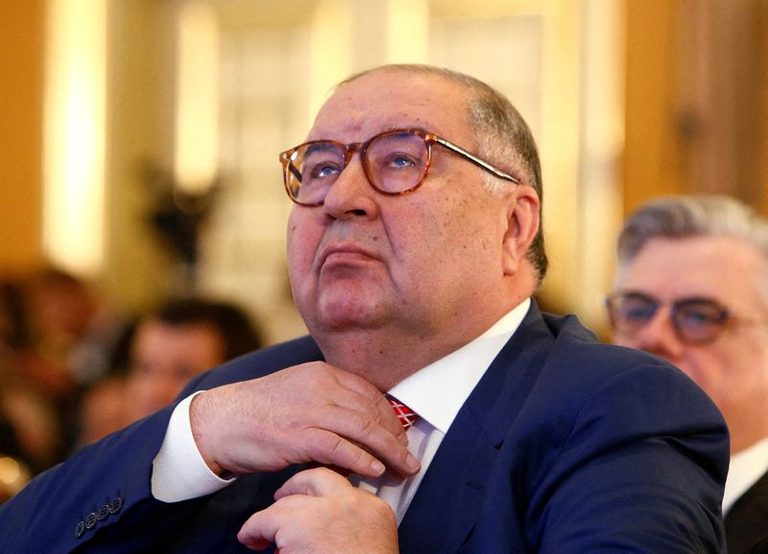
Brussels – The European Union’s decision on Tuesday to lift asset freezes and travel bans on Russian‑Uzbek metals magnate Alisher Usmanov and Mikhail Fridman, co‑founder of a major Russian conglomerate, has sparked a wave of criticism from several member states.
Member states question the move
France, which pushed for the relief, faced pushback from the Baltic nations and other partners who warned that the action sends a “very bad signal” at a time when Russia is intensifying pressure on Ukraine. Latvian officials initially blocked the measure before agreeing to abstain, and Estonia’s foreign minister described the decision as poorly timed.
Ukraine’s reaction
Vladyslav Vlasiuk, the Ukrainian president’s sanctions‑policy commissioner, expressed shock at the EU’s shift, saying he did not anticipate the delisting of two individuals of such magnitude. While he welcomed the three‑year renewal of broader sanctions, he questioned whether removing these two names was worthwhile.
EU officials defend the broader strategy
EU foreign policy spokesperson Christian Wigand emphasized that the bloc has adopted 21 sanction packages and is preparing a new set aimed at increasing pressure on Russia’s military‑industrial complex and its “shadow fleet” of oil‑and‑gas tankers. He noted that the EU is proposing roughly 1,600 additions to the sanctions list and hopes member states will approve them quickly to demonstrate continued commitment.
Underlying diplomatic dynamics
France’s push was linked to a separate diplomatic dispute involving Azerbaijan’s alleged use of Usmanov’s case to pressure Paris over two French citizens detained there. Azerbaijan’s president recently pardoned a French national convicted of espionage, a move France called a humanitarian gesture.
Diplomats said the sanctions relief was partly possible because the original measures were set to expire, and other governments felt they had little choice but to accommodate France’s request in exchange for a three‑year renewal of sanctions on about 3,000 other individuals and entities.
Expert commentary
Guntram Wolff, a senior fellow at the Brussels think‑tank Bruegel, warned that while the specific delisting may not dramatically affect the war in Ukraine, it sends a “very negative signal” that the EU could make dubious exemptions under political pressure.
Bill Browder, a British financier and outspoken critic of Russian President Vladimir Putin, warned that the decision could encourage other sanctioned Russian oligarchs to seek similar relief from “tin‑pot dictatorships” worldwide.
Looking ahead
EU diplomats indicated that discontent with the move is widespread across the 27‑nation bloc, and they expect further discussion on how to balance national interests with the collective goal of supporting Ukraine. The upcoming sanctions package will be a key test of the EU’s resolve.
Original reporting: Appleton, WI News Feed (HLL/CB) — read the source article.