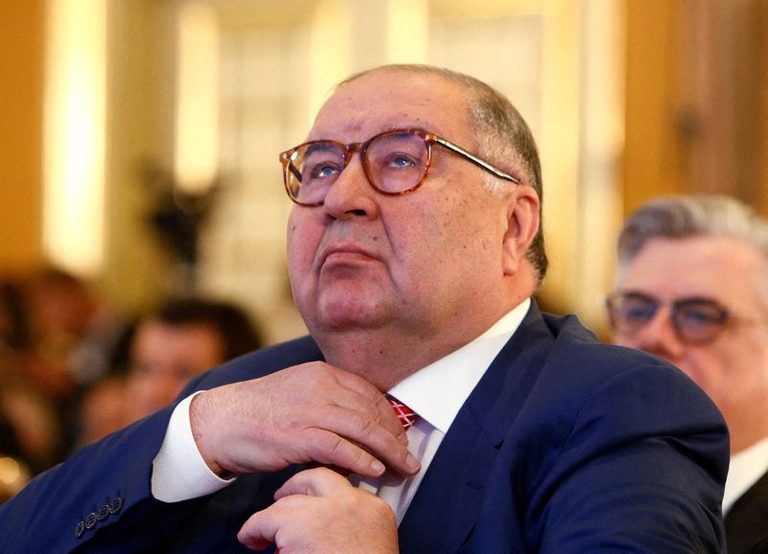
At a United Nations press briefing on Tuesday, Estonia’s foreign minister Margus Tsahkna sharply criticized France for advocating the removal of Russian‑Uzbek billionaire Alisher Usmanov from the European Union’s sanctions list. Tsahkna said the move “sends a very bad signal at a very wrong time” as Russia continues to increase pressure on Ukraine.
EU compromise and the broader sanctions regime
EU diplomats announced a compromise that would keep roughly 3,000 individuals and entities under sanctions while dropping two high‑profile billionaires, Alisher Usmanov and Mikhail Fridman, from the list. The decision was presented as a trade‑off to preserve the overall sanctions framework.
France’s rationale and the reaction from Tallinn
France argued that delisting the two businessmen was necessary for national security reasons, a stance that surprised many EU members. Tsahkna told Reuters, “One country put a very strong position on the table that these two people must be delisted, otherwise we’re actually losing the sanctions regime. This is a totally wrong message.” He added that France had offered no detailed explanation for its position.
Geopolitical pressure and alleged blackmail
According to three European diplomats, France faced pressure from Azerbaijan, where two French nationals are detained. Paris reportedly indicated privately that Baku was using Usmanov to “blackmail” it over the detained French citizens, an allegation that Azerbaijan denied.
Usmanov’s background and why the sanctions matter
Alisher Usmanov, a Russian‑Uzbek metals magnate, has long been linked to luxury assets across Western Europe, including property on the French Riviera. He was placed under EU sanctions in 2022 as one of Russia’s wealthiest businessmen, a move intended to curb the financial resources that support Moscow’s war effort.
Estonia’s concerns about European unity
Multiple European officials expressed that France’s stance had left them perplexed and damaged Paris’ credibility. Tsahkna warned that the delisting could undermine the united front Europe seeks to present against Russian aggression, especially as Russia escalates attacks on Ukrainian civilian infrastructure.
No official comment from France
To date, the French presidency has not issued a public statement on the matter, despite diplomats indicating that French officials led the push to remove Usmanov from the sanctions list.
Implications for EU foreign policy
The episode highlights the challenges the EU faces in maintaining a cohesive sanctions strategy when member states have divergent national interests. It also underscores the importance of clear communication among allies to avoid mixed messages that could be exploited by adversaries.
As the United Nations General Assembly continues its sessions, Estonia’s warning serves as a reminder that solidarity among democratic nations remains essential in confronting aggression and upholding the rules‑based international order.
Original reporting: Appleton, WI News Feed (HLL/CB) — read the source article.