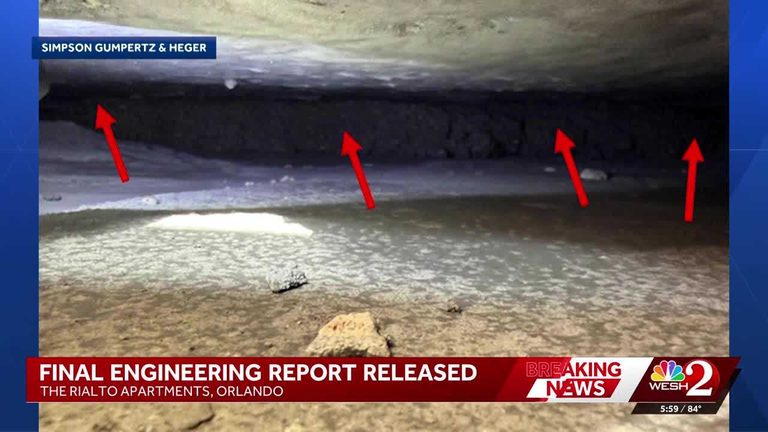
Orlando officials and residents received a detailed engineering assessment this week that explains the dramatic ground collapse that occurred at the Rialto Apartments on Sand Lake Road in March. The report, prepared by Rialto Engineering, identifies a loss of support beneath the building’s concrete slab as the primary cause.
Subsidence of limestone identified as key factor
According to the engineers, the underlying limestone has been moving downward, creating underground voids that the soil above is “raveling” into. This type of movement is typical of karst terrain, where soluble rock can dissolve over time, forming cavities that eventually cause the surface to sink. The report states that the subsidence process likely began well before residents noticed popping noises, stuck doors, and cracked walls.
Impact on residents and legal action
When the structural issues became evident, hundreds of tenants were evacuated from the complex for safety. The sudden appearance of a large hole beneath the building left many families scrambling for temporary housing. The incident has now become the centerpiece of a lawsuit filed by former residents, who allege negligence and breach of contract by the property management. The Rialto Apartments management declined to comment on the pending litigation.
What the findings mean for Orlando homeowners
The engineering report underscores the importance of regular geological assessments in areas built on limestone. While Orlando’s rapid growth has spurred many new developments, the city’s underlying geology can present hidden risks. Local officials are urged to consider more stringent soil‑stability testing for future projects, especially in neighborhoods where karst conditions are known to exist.
Community response and next steps
Neighborhood groups have expressed concern about the safety of other nearby structures that may sit on similar limestone formations. Some residents are calling for the city’s building department to issue guidance on how to detect early signs of subsidence. The engineering firm recommends ongoing monitoring of the site’s ground movement and suggests remediation measures, such as grout injection, to stabilize the voids.
As the lawsuit proceeds, the Rialto Apartments case serves as a reminder that infrastructure resilience is a shared responsibility among developers, engineers, and local government. Ensuring that homes are built on solid ground protects families, preserves property values, and upholds the community’s commitment to safe, stable neighborhoods.
Original reporting: WESH Orlando — read the source article.