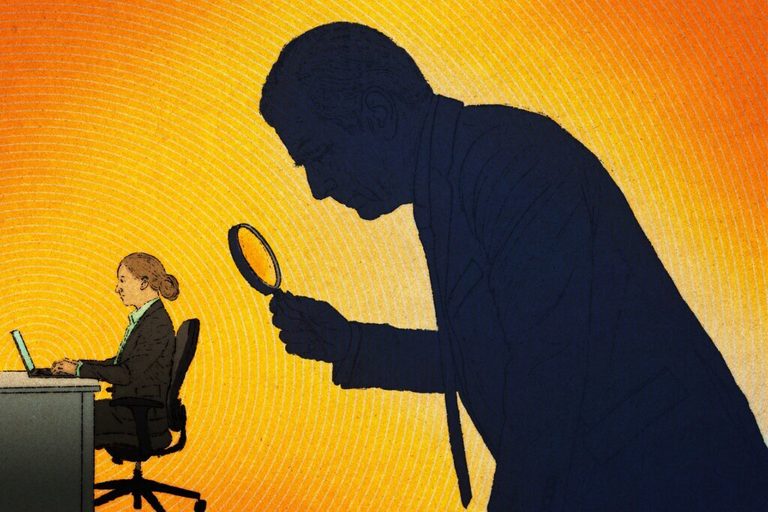
Employers across the United States are expanding the use of digital surveillance tools that were first adopted during the COVID‑19 pandemic. College administrators, pharmacy managers and warehouse supervisors are now monitoring everything from student essays to the length of patient appointments.
How Monitoring Is Being Applied
Examples include a college administrator reading adjunct professors’ comments on student essays, a pharmacy manager tracking the duration of each patient call, and warehouse scanners measuring how quickly workers inspect items on a conveyor belt. The technology can collect location data, task‑completion rates and even activate cameras on work‑issued smartphones and laptops.
Impact on Employees
Workers say the constant data collection creates a climate of distrust. Pharmacist Lannie Duong described feeling “not trusted, not appreciated, almost completely hopeless,” after her employer logged the minutes of each patient interaction and questioned her performance. She eventually took medical leave, attempted to organize a union, and was terminated after returning.
College instructor Arianna Anaya reported that administrators accessed students’ private essays and comments uploaded to a learning‑management system, including disclosures about abuse and family trauma. After a contract non‑renewal, Anaya said the experience left her feeling paranoid and unsafe.
Legal Landscape
Several states—New York, Connecticut, Delaware and Maine—require employers to notify workers when they are being monitored. Maine’s law goes further, prohibiting visual monitoring in employees’ homes or personal vehicles unless it is essential to the job. Privacy and AI compliance manager Edward Halle noted that the line between legitimate job duties and invasive surveillance will likely be clarified by the Department of Labor.
What Workers Can Do
Experts advise employees to learn what data their organization collects and to avoid using work devices for personal or family matters. If a notification requirement is absent, workers can ask managers directly, preferably in a collaborative tone, or coordinate with a union if one exists. Organizations such as the Electronic Frontier Foundation and Data & Society suggest asking specific questions about data use and storage.
Understanding whether built‑in tracking features in software like Microsoft Office or Zoom are active can be difficult, as they are often enabled by default. Workers are encouraged to request clarification from IT departments, which typically control these settings.
Looking Ahead
Wilneida Negrón, director of research and policy at Coworker, warned that “the forces of centralizing this kind of tracking and monitoring are moving too fast.” She urged workers to organize and stay informed about industry‑specific surveillance trends to protect their privacy and rights.
Original reporting: Alexandria, VA News – WTOP News — read the source article.