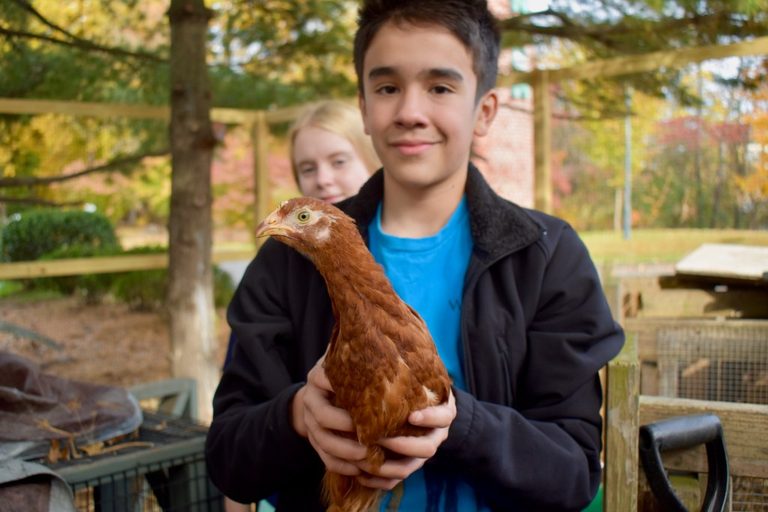
New Haven – Elm City Montessori’s Blake Street campus is turning its garden and farm into a living classroom that benefits both students and the surrounding neighborhood. Eighth‑grader Elizabeth, along with classmates AJ and Joseph, demonstrated the school’s recent harvest by pulling a full‑size carrot from the soil, washing it with a garden hose, and tasting it on the spot. The trio agreed the home‑grown carrot “tasted better than store‑bought,” a sentiment echoed by many families who purchase the farm’s weekly offerings.
Hands‑On Learning From Soil to Table
Outdoor environmental educator Jegbe Fasoranti leads students through practical lessons in agriculture, animal care and nutrition. While some classes work outdoors, others focus on indoor projects such as baking goods for sale and maintaining the kitchen and garden inventory. Principal Julia Webb says the program is designed to teach students “how to take care of themselves and their communities” by harvesting fresh produce and cooking with eggs from the school’s own chickens.
Students also embark on weekly hikes that reinforce the “idea of honoring and creating with land,” a principle Webb describes as helping children see themselves as agents of change. The farm currently supplies flower bouquets, fresh eggs and a variety of vegetables – tomatoes, cucamelons, peppers and broccoli – to staff and families. Webb noted that the school hopes to expand these offerings directly to the broader New Haven community in the near future.
Building Resilience and Responsibility
Beyond agricultural skills, the program teaches life lessons. When a hawk claimed several chickens over the summer, the school used $30,000 raised through its “Great Give” fundraiser to upgrade the coop and improve animal safety. Students like AJ, who transferred to Elm City Montessori this year, speak of the personal growth that comes from caring for nature. “At my old school we didn’t have chickens, unless it was for lunch,” he said, noting the value of daily interaction with living creatures.
Students also learn food safety, such as washing hands after handling chickens, and discover that many garden plants are safe to eat straight from the ground. AJ remarked that “some of these plants you can actually eat right from the ground without going to hospital,” while Joseph compared the peppery flavor of nasturtiums to wasabi and described the experience as “all connected” – a reminder that the health of the flock and the garden are intertwined.
Community Support and Future Plans
Each Friday, the farm sells produce, baked goods and flowers to families and staff, with proceeds earmarked for a seventh‑ and eighth‑grade trip to Boston. The school has invested roughly $10,000 in summer upgrades, including a new greenhouse that now supports broccoli and pumpkin production. A recently rescued chick, nicknamed “JB Jr.,” is being isolated before joining the flock, which already includes birds named after Hogwarts houses.
Webb emphasizes that the farm’s growth is a gradual process, but the commitment to stewardship remains strong. By involving students in real‑world agriculture, Elm City Montessori nurtures a generation that values hard work, self‑reliance and community service – core principles that align with the values of families throughout New Haven.
Original reporting: New Haven Independent — read the source article.