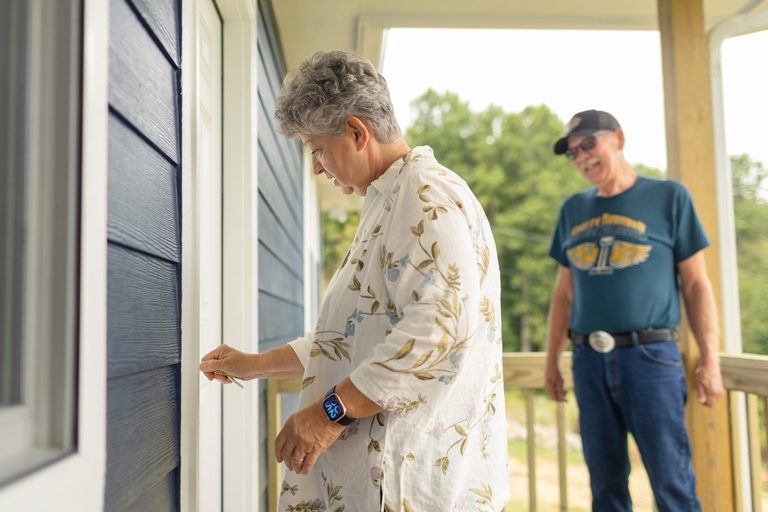
Elk Park mayor Connie Guinn celebrated a personal milestone this week when she received the keys to her fully rebuilt home, a project that began after Tropical Storm Helene devastated Western North Carolina in September 2024. The house, which had been rendered uninhabitable by flood‑water, mud, and black mold, was reconstructed through a partnership of federal aid, state resources, and the RENEW NC single‑family housing program.
Local leadership and community resilience
Guinn, a lifelong resident of Elk Park and former town clerk, was deeply involved in volunteer relief efforts when Helene struck. Though her home survived the flood, it suffered severe structural damage that forced her and her husband, Tommy, into a short‑term rental while repairs were planned. “I didn’t think it was real,” Guinn said after finally holding the new keys, reflecting the relief many families feel as the town rebuilds.
Federal and state assistance at work
Following the disaster, Guinn received an initial grant from the Federal Emergency Management Agency (FEMA). The grant helped cover immediate needs, but the full reconstruction was made possible by RENEW NC, a program administered by the North Carolina Department of Commerce. RENEW NC, funded by a Community Development Block Grant for Disaster Recovery from HUD, targets low‑ to moderate‑income households and has already completed 150 homes across Western North Carolina.
“It has been so gratifying to see how quickly the federal government approved our HUD action plan and got money to the state, and how quickly folks were able to get their applications turned in and select contractors,” said Scott Elliot, deputy director of engagement for GROW NC, the Governor’s Recovery Office.
Economic impact of Helene
Helene damaged more than 73,000 homes statewide, with an estimated $15.4 billion in direct housing losses and nearly $60 billion in total damages. Federal and state funding has covered roughly $14.4 billion so far, leaving a significant gap compared with past disasters such as Hurricane Katrina.
Governor Josh Stein recently urged Congress for an additional $10 billion in recovery funds, emphasizing $3 billion for unmet housing needs. At a rally in Gastonia, President Donald Trump joked that he would withhold remaining federal recovery funds if Republican Senate candidate Michael Whatley did not win the upcoming election. He later clarified the comment was made in jest, underscoring the administration’s overall support for swift disaster assistance.
Continuing challenges and local hopes
While RENEW NC continues to process applications—2,200 active and 5,696 ineligible or inactive—the program’s eligibility ceiling of 120 percent of area median income means many survivors still face hurdles. Less than 1 percent of affected homeowners had flood insurance, amplifying the need for public assistance.
Local nonprofits, such as Volunteer Organizations Active in Disaster, have expressed frustration with bureaucratic red tape, but legal aid groups like Pisgah Legal Services are helping families navigate the paperwork. “A lot of times barriers are that people have lived in a home for generations and lack clear ownership records,” explained chief program officer Molly Maynard.
Looking ahead for Elk Park
Guinn, who was sworn in as mayor in December 2025, says her experience fuels a broader vision for the town. She hopes to preserve Elk Park’s small‑town charm while encouraging new businesses, including a restaurant that could serve both residents and travelers along Highway 19E.
With the road to Minneapolis still in need of repair and the community’s infrastructure gradually stabilizing, Elk Park exemplifies how faith, family, and responsible government can work together to rebuild after a disaster.
Original reporting: Carolina Public Press — read the source article.