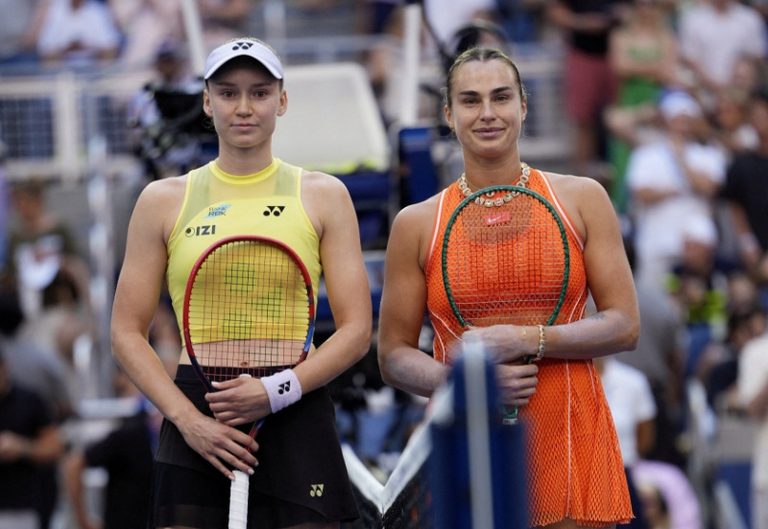
In a dramatic showdown on Saturday, Elena Rybakina, the 27‑year‑old representing Kazakhstan, secured her third Grand Slam championship by overcoming Belarusian No. 1 Aryna Sabalenka in the U.S. Open women’s singles final. The match, played on the iconic hard courts of Flushing Meadows, ended 6‑4, 5‑7, 6‑2, showcasing Rybakina’s resilience after an early ankle injury threatened her campaign.
Career milestones and recent form
Rybakina entered the tournament ranked No. 2 in the world and seeded second. Her victory adds a U.S. Open title to her Wimbledon triumph in 2022 and her Australian Open win earlier this year, making her the first Kazakh player to claim three major crowns.
Her ascent has been steady. After turning professional on the ITF Circuit in 2014, she captured two ITF doubles titles in 2017 and added a singles and doubles title in 2018. Her first WTA title came in Bucharest in 2019, where she defeated Patricia Maria Tig to break into the top 50.
Rybakina’s breakthrough on the biggest stage arrived at Wimbledon 2022, where she defeated Ons Jabeur to claim her maiden Grand Slam. She followed that with a runner‑up finish at the 2023 Australian Open, losing to Sabalenka in three sets, and made her top‑10 debut shortly thereafter.
In 2024 she collected three titles in Brisbane, Abu Dhabi and Stuttgart, while finishing runner‑up in Doha and Miami. The following year she added victories in Strasbourg and Ningbo, plus a triumph at the WTA Finals in Riyadh, where she again bested world No. 1 Sabalenka.
Her 2026 Australian Open win over Sabalenka marked her second major title of the season, and her run to the U.S. Open semi‑finals secured the world No. 1 ranking, pending the next official update.
Key moments from the final
The final began with Rybakina taking the first set 6‑4, using aggressive baseline play and a powerful serve to keep Sabalenka on the defensive. Sabalenka rallied in the second set, forcing a tiebreak and ultimately prevailing 7‑5 to level the match. In the decisive third set, Rybakina’s consistency and superior movement allowed her to break Sabalenka twice, sealing the set 6‑2 and the championship.
After the match, Rybakina praised her team’s support and highlighted the importance of overcoming adversity. “The ankle injury early in the tournament was a real test,” she said. “I’m grateful for the faith my coaches and family placed in me, and I’m proud to bring this trophy home for Kazakhstan.”
Impact on the sport
Rybakina’s victory underscores the growing global diversity of women’s tennis, with players from non‑traditional tennis nations achieving top‑level success. Her rise also adds depth to the WTA Tour’s elite, challenging the dominance of long‑standing powerhouses.
Analysts note that her aggressive style, combined with mental toughness, makes her a formidable opponent on any surface. With the world No. 1 ranking now within reach, Rybakina is poised to influence the sport’s narrative for years to come.
Looking ahead
Rybakina’s schedule includes upcoming Premier events in Europe and a potential appearance at the year‑end WTA Finals. Fans and commentators alike will watch to see if she can sustain her momentum and defend her titles in the next season.
Original reporting: Appleton, WI News Feed (HLL/CB) — read the source article.