Locals who’ve done it once tend to describe the Bowl of Fire the same way: they went expecting a hike and came back feeling like they’d stumbled into another planet. The name sounds dramatic, but most first-timers assume it’s just a rebranded desert walk with orange rocks and a parking lot. It is not.
The trailhead sits off Northshore Road near the Lake Mead National Recreation Area’s Henderson-side access — about a 25-minute drive from the Green Valley corridor, past the Pabco Road turnoff and into terrain that starts feeling remote faster than the mileage suggests. There’s no fee station at this specific pullout, though the broader Lake Mead NRA charges $25 per vehicle, and that pass covers everything inside the boundary for seven days. Parking is minimal — a gravel shoulder that fits maybe eight or ten cars — and on weekend mornings from October through April, it fills fast.
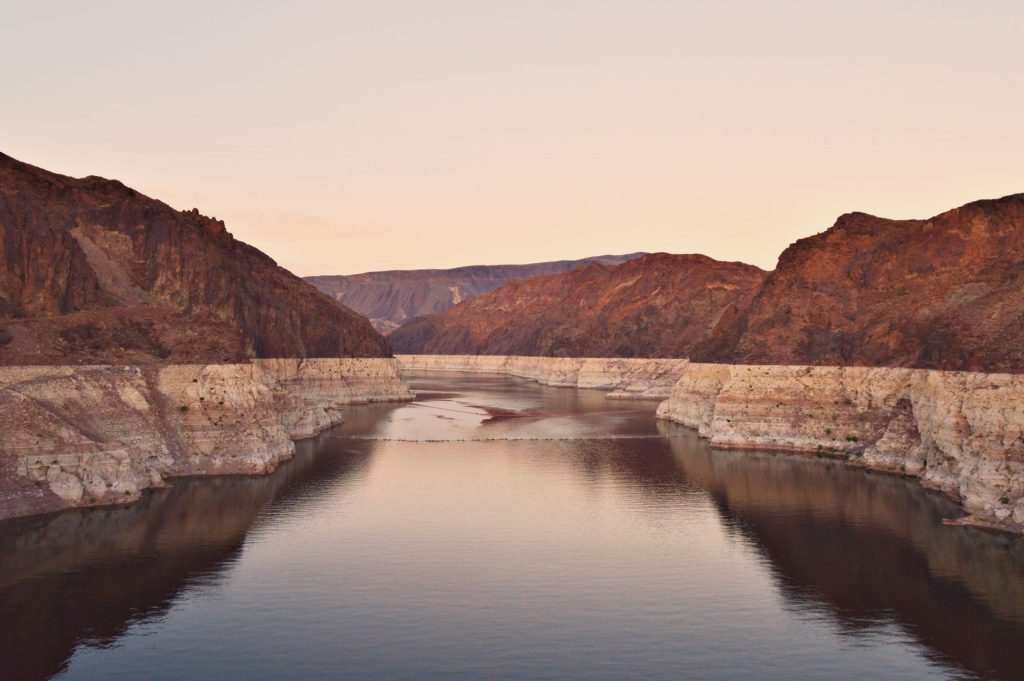
The route itself runs roughly four miles out and back, with no maintained trail for most of it. Navigation is by cairns and common sense. What draws people here isn’t a destination viewpoint or a waterfall — it’s the geology. The Bowl of Fire is a collapsed dome of Aztec sandstone, stained deep red and orange by iron oxide, tilted at angles that look structurally improbable. Up close, the rock has texture: ripple marks left by ancient sand dunes, cross-bedding visible in exposed cliff faces, the occasional fossilized trace of something that lived here when this was not desert.
Hikers picking their way through the formation tend to get quieter the deeper they go. The bowl shape blocks wind and muffles sound, and in mid-morning light the walls glow in a way that’s genuinely hard to photograph accurately. Most phones flatten the color. The experience is more saturated than any image of it.
Difficulty is moderate, though the loose rock and route-finding add a layer that straightforward mileage doesn’t capture. Bring more water than seems necessary — a minimum of two liters per person in cooler months, more if temperatures are climbing. There’s no shade worth mentioning once you’re inside the formation. Dogs are allowed but the terrain is rough on paws; most regulars leave theirs in the car.
The hike draws a specific crowd: not the casual resort-to-trailhead type, but people who’ve already done the standard Red Rock loop and want something rawer. On a weekday in January, a person might share the Bowl with two or three other groups at most. On a Saturday in March, expect more company, though the formation is large enough to absorb it. Summer is genuinely dangerous here — surface temperatures on exposed rock can exceed 140 degrees by noon.
There are no amenities. No restrooms, no water, no ranger station at this access point. That’s also the point. The Bowl of Fire sits close enough to Henderson to reach on a half-day, but the landscape feels entirely indifferent to that proximity — old in a way that the suburb immediately surrounding it simply is not.