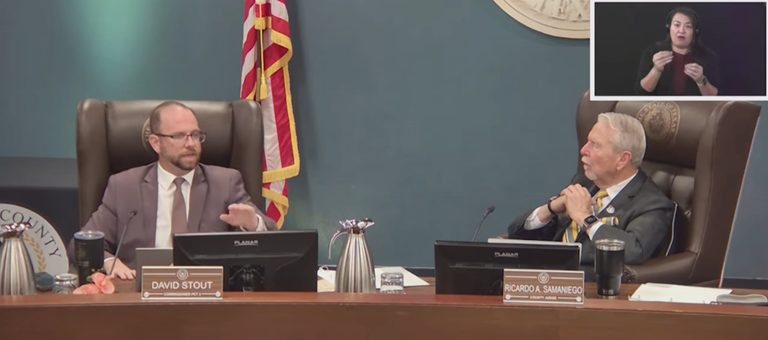
El Paso County leaders are moving to tighten oversight of travel expenses after an ABC‑7 Xtra investigation revealed that commissioners court members have spent close to a quarter‑million dollars of taxpayer money on travel over the past several years. At a special meeting on Thursday, the court discussed how to improve accountability and ensure that future trips directly advance the county’s strategic goals.
Commissioners raise concerns about recent Mexico City trip
Precinct 2 Commissioner David Stout voiced frustration that staff from the office of the county judge, which handles binational affairs, were not present at a recent conference in Mexico City. Stout argued that the absence of the binational‑affairs staff undermined the county’s ability to advocate effectively on issues that affect both El Paso and its Mexican neighbors.
“That’s my issue,” Stout said. “The unilateral decision was made by the county judge to not have somebody from bi‑national affairs at that event because of the issue with the travel. I think instead of being worried about that, we need to push back and say we need to be at the table at these events because we’re doing ourselves a disservice if we’re not, right?”
Stout added that he attended the conference himself, but without the dedicated staff member, the trip did not fully serve the county’s strategic objectives. “I go for my own knowledge and my own benefit, and for my office’s benefit because we’ve been involved in binational affairs,” he explained. “When the person who’s supposed to be in charge of binational affairs is absent, it’s a disservice to the whole court and to our whole strategy.”
County judge acknowledges lack of communication
County Judge Ricardo Samaniego responded that he was unaware of Stout’s travel plans and had canceled his own trip to the same conference over concerns about the travel policy. “I think we’ve done a bad job of you traveling, coming back, and we don’t know what happened,” Samaniego said. “There’s no reporting, there’s no information, you’re not sharing. For example, right now you went to Mexico City, we didn’t know about it. It would have been fair to say, ‘I’m going to be there, is there anything you might want me to represent?’”
Samaniego also questioned the lack of post‑trip reporting, asking, “Coming back and saying, what did you gain?” The judge’s comments underscore the need for clear documentation of travel purpose, outcomes, and costs.
Administrative steps toward greater transparency
County Chief Administrator Betsy Keller said staff will draft new reporting requirements and place the proposal on an upcoming commissioners court agenda. The anticipated policy would likely mandate advance notification of travel, detailed itineraries, cost estimates, and post‑trip summaries outlining the benefits to the county.
These measures aim to protect taxpayer dollars while ensuring that El Paso’s participation in cross‑border discussions remains robust. By formalizing travel oversight, the county hopes to avoid future misunderstandings and to strengthen its ability to represent local interests in binational forums such as the National Association of Counties (NACO) and other regional gatherings.
Why the change matters for families and communities
Transparent travel policies align with the community’s desire for responsible stewardship of public funds. When elected officials travel wisely and report back clearly, they reinforce trust among families who expect their tax dollars to support essential services—public safety, schools, and infrastructure—rather than unchecked expenses.
El Paso County’s proactive approach reflects a broader commitment to good governance, fiscal responsibility, and effective advocacy on both sides of the border. Residents can look forward to clearer communication from their leaders and assurance that future trips are undertaken with a clear, documented benefit to the community.
Original reporting: El Paso News (HLL/CB) — read the source article.