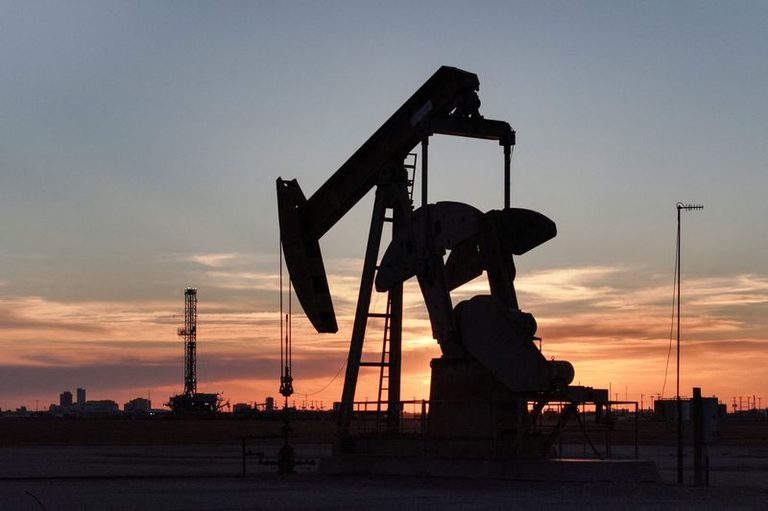
The U.S. Energy Information Administration (EIA) announced on Wednesday that it is raising its oil price projections for this year and next. The agency now expects the global benchmark Brent crude to average roughly $91 a barrel in the spot market in 2026, and U.S. West Texas Intermediate (WTI) to average $84.65 per barrel. Both figures represent an increase of nearly five percent from the agency’s prior outlook.
Why the forecast jump?
The EIA attributes the upward revision to a sharp decline in global oil stockpiles. Since the start of the Iran war, worldwide inventories have fallen by about 400 million barrels, and the agency expects further draws as Middle‑Eastern production and exports remain constrained through the end of the year.
Impact of the Iran conflict
More than six months into the Iran war, Tehran has repeatedly disrupted oil flows through the Strait of Hormuz and targeted neighboring energy infrastructure in retaliation for U.S. strikes. In August, Middle‑Eastern output shut‑ins rose to 6.7 million barrels per day, up from 5 million bpd in July. The EIA notes that attacks on Saudi Arabia’s exports via the Bab el‑Mandeb and a slowdown in ship departures from the Red Sea port of Yanbu have further tightened supplies.
Future supply outlook
While the agency expects some relief in the coming months as shipments through the Strait of Hormuz gradually increase and exporters employ work‑arounds such as ship‑to‑ship transfers, it cautions that both the flow through Hormuz and the work‑arounds remain vulnerable to developments on the battlefield. The EIA projects that average Middle‑Eastern shut‑ins will be about 5.7 million barrels per day in the fourth quarter, and that regional output and exports are unlikely to return to pre‑conflict levels until the second quarter of 2027.
Broader market reaction
Following the latest escalation of attacks on shipping and energy facilities, Brent crude prices briefly topped $100 a barrel on Wednesday. The EIA’s report, finalized on September 3, preceded the most recent surge, but its revised forecasts reflect the reality that higher oil and fuel prices are now a visible sign of the war’s toll on global energy markets.
What this means for Americans
Higher benchmark prices typically translate into increased gasoline and diesel costs at the pump, affecting families and businesses across the country. The Trump administration continues to monitor the situation closely, emphasizing the importance of energy security and encouraging domestic production to mitigate the impact of foreign disruptions.
Stakeholders, including industry groups and consumer advocates, are watching the EIA’s outlook closely as they plan for the coming months. The agency’s forecast underscores the need for a resilient energy strategy that balances domestic supply growth with prudent foreign‑policy actions.
Original reporting: Appleton, WI News Feed (HLL/CB) — read the source article.