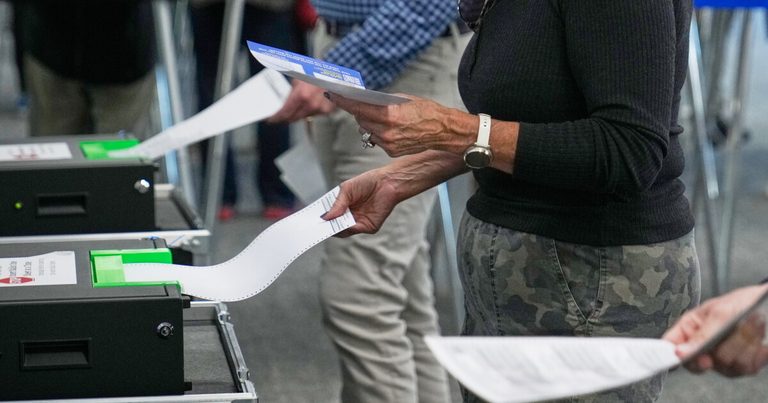
Early voting numbers are climbing sharply in the states that will decide control of the U.S. Senate, according to an Associated Press analysis of ballots cast two weeks before Election Day. The surge reflects heightened voter enthusiasm in a midterm cycle that pits Democratic challengers against entrenched Republican incumbents.
Texas leads the surge
In Texas, early voting is up 74% compared with the same point in 2022, and nearly one million ballots have been cast two weeks from the election—almost double the 550,000 recorded at this stage in the previous midterm. While the data does not break down ballots by party registration, the sheer volume underscores the importance of the race between Democrat James Talarico and Republican Attorney General Ken Paxton for the seat held by Sen. John Cornyn.
Kansas and other battlegrounds see growth
Kansas has more than doubled its early‑vote turnout since 2022, a sign that the race between GOP Sen. Roger Marshall and Democrat Adam Hamilton is drawing significant attention. In Maine, Ohio, North Carolina and other key states, early‑in‑person and mail voting are up more than 30% compared with the last midterms.
Republican candidates in many of these states are seeing a smaller share of advance voters than they did four years ago, suggesting that the Democratic push to flip Republican‑held Senate seats is resonating with some voters.
National picture and policy backdrop
Nationally, more than 13 million mail‑in and early‑in‑person votes have been cast, up from 9 million at the same point in 2022. Part of the increase reflects expanded early‑voting windows in several states and more comprehensive data reporting.
The analysis notes that dissatisfaction with President Trump’s tariffs, persistently high living costs, and elevated gas and diesel prices linked to the Iran conflict have generated political blowback against Republicans in areas the party did not expect to defend this year.
Impact on Senate balance
Republicans currently hold a 53‑47 majority in the Senate. With the early‑voting surge, Democrats are hopeful that the increased turnout could narrow that gap, especially in states where they have traditionally struggled.
In Ohio, early voting is up 30%, with an additional 156,000 ballots cast compared with 2022. Changes to the state’s mail‑ballot rules, including the elimination of a grace period, have forced voters to return ballots earlier, potentially contributing to the higher numbers.
Campaign spending and rallies
Republicans have recently shifted resources, pulling back spending in a once‑competitive North Carolina Senate race while pouring nearly $12 million into Kansas to support Sen. Marshall. President Trump held a rally in Kansas, where more than 55,000 voters have already cast ballots—more than double the 27,000 recorded at this stage in 2022.
Democratic candidates are also targeting high‑profile Republican officeholders. In Texas, Democrats are focusing on Attorney General Paxton, who faces corruption allegations and a recent impeachment by the state legislature, though he was later acquitted.
Looking ahead
The early‑voting trends provide a snapshot of voter enthusiasm, but the final outcome will depend on turnout on Election Day and how campaigns continue to mobilize supporters. As the Senate races tighten, both parties are likely to intensify their outreach in the coming weeks.
Original reporting: KSHB 41 Kansas City (local) — read the source article.