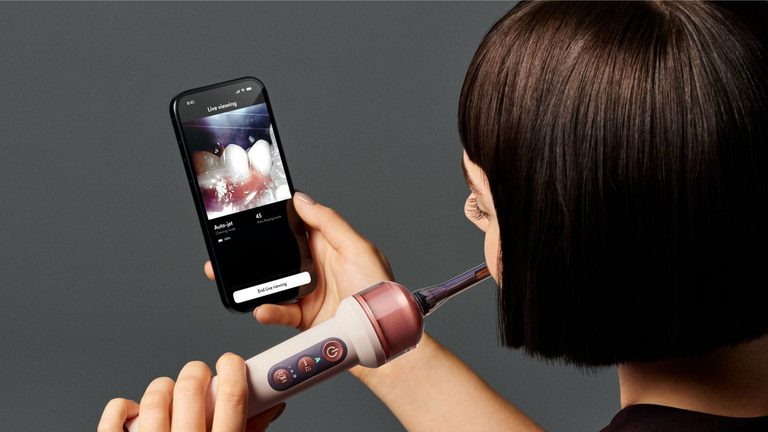
Dyson, the British technology company best known for its high‑performance vacuums and hair‑care tools, announced a new addition to its personal‑care lineup: the CameraJet electric toothbrush. Priced at $499, the device combines a miniature camera, a targeted water jet, and standard brushing action to give users a visual guide while they clean their teeth.
How the CameraJet works
The toothbrush head houses a tiny camera that streams a live video feed to a companion smartphone app. Users can see a close‑up view of each tooth and the gumline as they brush, allowing them to spot plaque or food particles that might otherwise go unnoticed. In addition to the visual feed, the CameraJet includes a precision water jet that directs a focused stream of water into gaps between teeth and along the gumline. Dyson says the water jet helps flush away debris that brushing alone may miss.
Features and accessories
The CameraJet package includes two dual‑bristle brush heads, an anti‑gravity water tank, a refill dock with a reservoir cap, a travel case, a lithium‑ion battery, and a USB‑C charging cable. The toothbrush is currently offered only in a “Ceramic Pink” colorway and can be purchased directly from Dyson’s website.
What the technology promises
Dyson markets the CameraJet as the first toothbrush to merge visual feedback with a water‑jet cleaning system. By letting users watch the brushing process in real time, the company argues that consumers can achieve more precise cleaning and develop better oral‑hygiene habits. The water jet is intended to complement the brush’s angled cleaning components, which are engineered to reach tighter spaces throughout the mouth.
Limitations and professional care
Dyson makes clear that the CameraJet does not replace regular dental check‑ups. While the camera can highlight areas that need extra attention, only a dentist can diagnose cavities, gum disease, or other conditions that are not visible during everyday brushing.
Market context
The oral‑care market has long been dominated by established brands such as Philips Sonicare, Oral‑B, and Colgate. Many of those products already feature pressure sensors, timers, and app connectivity. Dyson’s approach diverges by adding direct visual guidance, a move that reflects the company’s broader strategy of applying its engineering expertise to new consumer‑product categories.
Pricing and availability
At $499, the CameraJet sits at the high end of the electric‑toothbrush market, comparable to premium models that include advanced sensors and subscription services. The price point has drawn attention from consumers who are weighing the value of visual feedback against the cost of traditional dental care tools.
Consumer response
Early reactions on social media highlight both curiosity and skepticism. Some users appreciate the novelty of seeing their teeth while they brush, while others question whether the added technology justifies the expense. Dental professionals have generally cautioned that while the device may aid in plaque removal, it should be viewed as a supplement—not a substitute—for professional cleanings.
Future outlook
Dyson’s entry into oral care underscores a growing trend of tech‑focused consumer products that blend hardware with software. Whether the CameraJet will gain a foothold among everyday toothbrush users remains to be seen, but its launch signals that even the most routine personal‑care items are being re‑imagined through a high‑tech lens.
Original reporting: Las Cruces Sun News (HLL/CB) — read the source article.