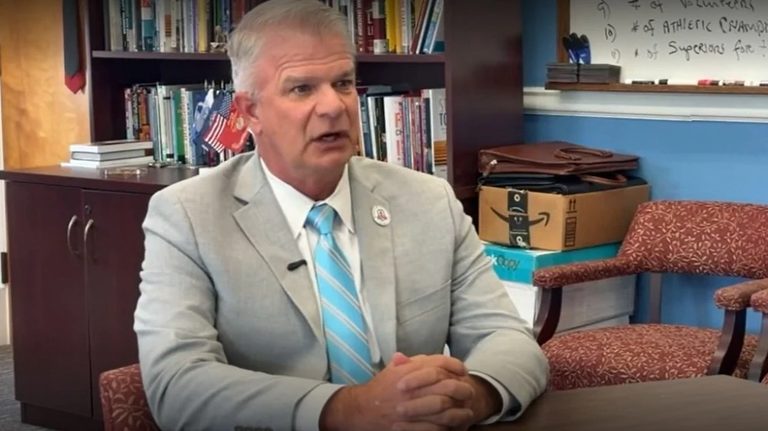
Two Northeast Florida school districts, Duval County Schools and St. Johns County Schools, have successfully balanced their budgets before the start of the new school year. Duval County Schools was initially facing a $100 million shortfall, while St. Johns County Schools had a $23 million deficit from the previous year.
Budget Cuts and Consolidation
St. Johns County Schools Superintendent Brennan Asplen implemented various cost-cutting measures, including reducing leases and eliminating 20 positions at the district office. The district also cut 150 portable classrooms and moved students to existing schools, which resulted in the elimination of 130 instructional positions. However, Asplen noted that some positions will be filled through retirements and new hires.
Asplen also announced that the district is scaling back its school construction plans due to the budget constraints. Instead of building multiple new schools, the district will only construct one high school in the next three years.
Duval County Schools’ Financial Situation
Duval County Schools Superintendent Christopher Bernier stated that the district has right-sized its budget and is no longer facing a shortfall. The district operates on a nearly $3.4 billion budget, which is roughly $1 billion more than the entire city of Jacksonville’s budget. Bernier attributed the initial projected $1.4 billion deficit to unclear sources but emphasized that the district is taking steps to strengthen its finances, including consolidating smaller schools that are costly to operate.
Bernier expressed cautious optimism about the district’s financial situation, stating that two strong budget years are encouraging, but he wants to see several more before considering the district truly stable. He hopes that continued financial stability will allow the district to grow its fund balance and potentially provide benefits to employees.
Clay County Schools also reported being on solid financial footing, despite acknowledging the broader challenges facing Florida school systems, such as shifts in traditional public-school enrollment and the expansion of state voucher programs.
Original reporting: Jacksonville Today — read the source article.