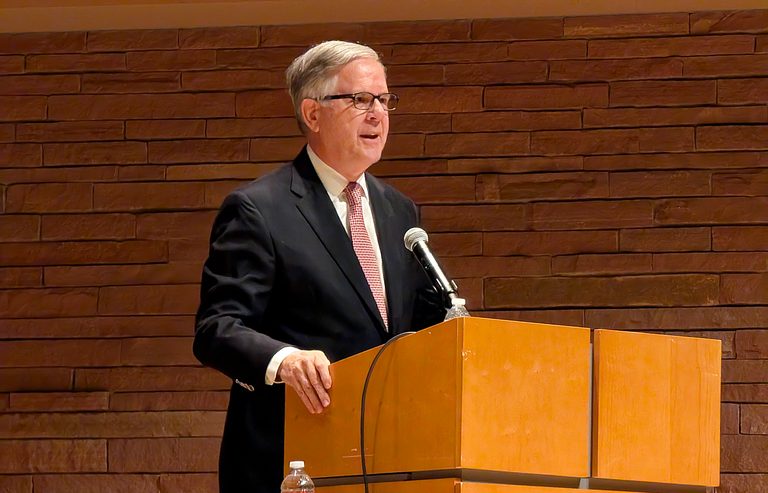
Representatives from eight of the world’s largest automakers met in Durham on Wednesday to recognize IONNA, the Durham‑based public DC fast‑charging network owned by Toyota, BMW, General Motors, Honda, Hyundai, Kia, Mercedes‑Benz and Stellantis. IONNA received a J.D. Power award for ranking highest among public fast‑charging networks, a clear signal of confidence in the industry despite a recent dip in electric‑vehicle (EV) sales.
Local impact and industry optimism
“There’s been, of course, a slowdown for some time, but there’s still a long‑term trajectory for battery electric vehicles and all electrified vehicles,” said Thibaut de Barros Conti, vice president of business development at Toyota North America. He added that pooling resources to improve charging benefits both customers and the broader market.
Durham’s selection as IONNA’s global headquarters underscores North Carolina’s growing role in the EV ecosystem. Toyota’s $13.9 billion battery plant in Liberty, southeast of Greensboro, began production in 2025 and is expected to employ about 5,100 people when fully staffed. The plant produces batteries for hybrids, plug‑in hybrids and fully electric models assembled in the United States.
Charging reliability improves
J.D. Power’s latest study shows public‑charging reliability is on the rise. The share of visits where drivers arrived at a station but could not charge fell to 12 %, the lowest rate recorded since the study began. IONNA earned 807 points out of 1,000, outpacing the Mercedes‑Benz Charging Network and Rivian Adventure Network. The study surveyed 6,594 owners of fully electric and plug‑in hybrid vehicles.
IONNA CEO Seth Cutler said drivers first need confidence that a charger is available and functional – the “bare minimum.” He emphasized that the next step is creating a pleasant, safe environment where drivers can spend time while they charge.
Network growth plans
IONNA currently operates about 177 locations across 30 states and expects to exceed 200 sites by the end of the year. The company reports more than 1,400 charging bays in operation, with another 700 under construction, and aims to reach at least 30,000 bays across North America by 2030.
In North Carolina, IONNA has opened more than a dozen locations, including a flagship Rechargery that transformed a roughly 100‑year‑old gas station in Apex into a charging destination with covered chargers, restrooms, a 24‑hour lounge and a bakery run by a local entrepreneur. A site in Garner offers similar amenities. All chargers are brand‑agnostic and support both major connector types.
Automakers’ broader strategy
Toyota’s “multi‑pathway” strategy continues to include hybrids, plug‑in hybrids, fully electric vehicles and hydrogen fuel‑cell vehicles. More than half of Toyota’s current sales are classified as “electrified,” a category that includes conventional hybrids. The company, along with its partners, is working to lower vehicle prices as battery technology matures, while noting that tariffs add pressure to the industry.
Cutler predicts that as the charging network expands, EV sales could begin growing again next year. “We’re building the network for both today to meet the needs of drivers, but also for 2027 and beyond, as the market continues to grow,” he said.
Looking ahead
While EV sales fell 20.5 % in the second quarter compared with the same period last year, the market showed improvement from the first quarter, suggesting a possible stabilization. Automakers remain committed to expanding charging infrastructure, believing that reliable, convenient access is essential to restoring consumer confidence and reviving growth in the electric‑vehicle sector.
Original reporting: WRAL Raleigh — read the source article.