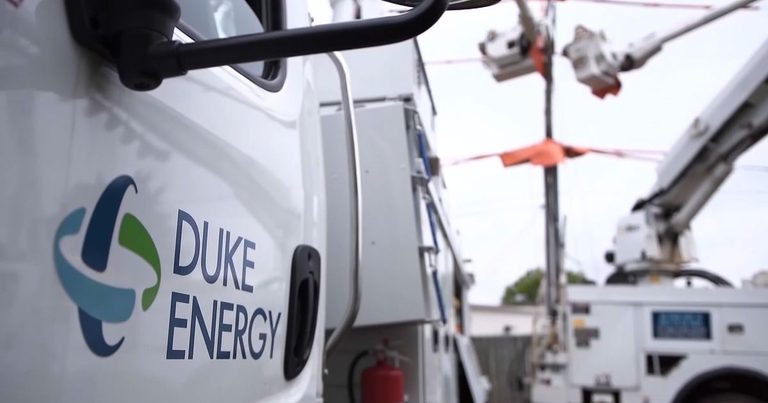
Raleigh residents will feel higher electric bills beginning Jan. 1, 2027 after the North Carolina Utilities Commission approved two‑year rate plans for Duke Energy Carolinas and Duke Energy Progress, according to WRAL. The decision also introduced a separate rate schedule for large data centers, a move regulators say shields ordinary customers from the financial risks of rapidly expanding digital infrastructure.
WRAL reported that residential electricity rates are projected to rise about 9.5% for Duke Energy Carolinas customers and 9.3% for Duke Energy Progress customers. For a typical household using 1,000 kilowatt‑hours per month, the utility’s own projections show a $6.53 monthly increase in Jan. 2027 and an additional $4.66 in Jan. 2028 for Carolinas customers – a total rise of $11.19 by 2028. Progress customers would see a $9.62 increase in Jan. 2027 followed by $5.89 in Jan. 2028, totaling $15.51 per month, according to the same source. Those figures translate to roughly $134 to $186 of extra annual costs for a typical home.
Local business owners are already voicing concern. Alejandro Leon Jr., who opened Olé Sports Bar and Lounge in downtown Raleigh a year ago, told WRAL the looming hikes “put business owners like myself in a crunch.” Midori Brooks, a Durham resident who recently received a $900 electricity bill, said she may need a second job to keep up, noting that $200 of that bill was already past‑due.
To offset the impact on low‑income households, Duke Energy agreed to contribute $20 million in shareholder funds for bill assistance and home‑repair weatherization programs, WRAL noted. However, the $42 monthly credit currently available through Duke’s Customer Assistance Program is set to expire at the end of December, just as the new rates take effect.
Time.news added that the overall package reflects a 7.4% increase across all customer classes, with residential customers seeing average annual rises of 4.7% in the Progress territory and 4.8% in the Carolinas territory, according to Yahoo Finance. The commission also authorized a 9.8% return on equity for both utilities, down from Duke’s original request of 10.95%.
Data‑center safeguards are a key part of the order. Regulators created a new rate schedule for facilities drawing at least 50 megawatts, requiring upfront payments and long‑term contracts for the largest users. Between March 2024 and April 2026, Duke signed contracts for 6.7 gigawatts of capacity, 92% of which is driven by data centers, WRAL reported.
Environmental groups expressed disappointment with the commission’s decision to extend operation of two coal units at the Marshall Steam Station until 2034 and the Cliffside Steam Station until 2033, as noted by The Raleigh News & Observer. Beyond Coal campaign manager Mikaela Curry called the move “unsettling,” according to WWAYTV3.
What’s next: The new rates become effective on Jan. 1, 2027. Duke Energy must submit revised revenue calculations within 10 days of the commission’s order and updated rate schedules for approval within 30 days. The utilities are slated to merge into a single entity on Jan. 1, 2027, with blended rates to be phased in over subsequent rate cases.