At its September 22 meeting, the Dripping Springs City Council voted to adopt the fiscal year 2026‑27 budget while also lowering the city’s ad valorem tax rate. The move promises a modest tax‑bill reduction for homeowners and reflects the council’s commitment to fiscal responsibility and community stability.
Budget basics and tax impact
The approved budget totals $28.6 million, projecting $4.96 million in property tax revenue—about $360,095 more than the previous year’s budget. The council set the ad valorem tax rate at $0.219217 per $100 of valuation, comprised of a $0.173100 maintenance‑and‑operations (M&O) rate and a $0.046117 interest‑and‑sinking (I&S) rate.
For the average homestead valued at $571,800—a 1.26 % increase over the prior fiscal year—owners can expect to pay roughly $1,253 in city taxes, a $27 decrease from last year’s amount. This reduction directly benefits families, allowing them to keep more of their hard‑earned income.
Spending priorities
The FY 2026‑27 budget outlines $16,047,688 in expenditures against $16,836,245 in projected revenue. Key spending categories include:
- $4,327,235 for city salaries, ensuring that essential services remain fully staffed.
- $259,851 for public improvements, supporting infrastructure upgrades that keep Dripping Springs safe and attractive.
- $223,258 earmarked for Founders Day celebrations, preserving the town’s heritage and community spirit.
These allocations demonstrate a balanced approach: maintaining essential services while investing in projects that enhance quality of life for residents.
How the lower rate was achieved
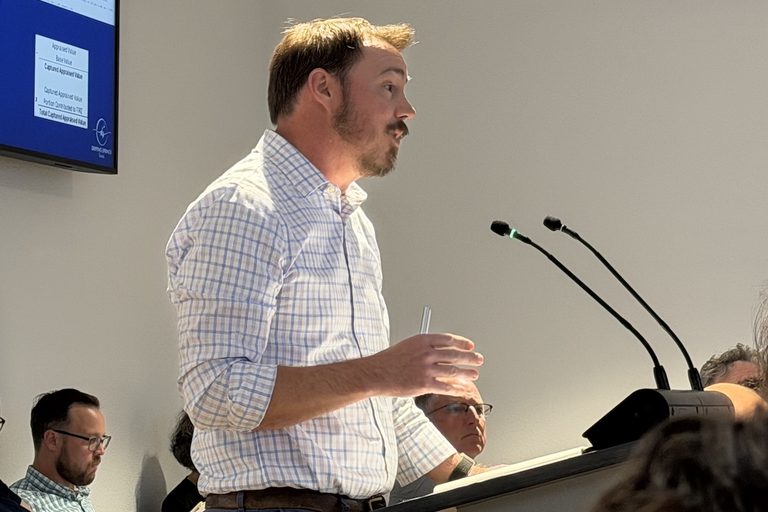
The council originally proposed a higher tax rate, but a diligent citizen identified a calculation error stemming from a legislative change that took effect on January 1. Deputy City Administrator Shawn Cox explained that the mistake inflated the rate by roughly 27 cents per $100 of valuation, as the city’s property valuation appeared to have dropped by $300 million.
“Thankfully a resident brought it to our attention before we adopted a rate,” Cox said. “We had to re‑certify the worksheet and get the number correct so that we could adopt a rate that was accurate.” The council’s swift correction underscores the importance of citizen involvement in local governance.
Leadership comments
Mayor Bill Foulds Jr. praised city staff for their hard work and acknowledged the financial pressures facing residents and businesses. “Our goal has been to balance those realities with the responsibility we have to provide the services and infrastructure our growing community needs,” he said in the official release.
The council’s decision aligns with the community’s desire for prudent budgeting, lower taxes, and continued investment in public services—principles that resonate with families and faith‑based residents who value responsible stewardship of taxpayer dollars.
What’s next for Dripping Springs
With the budget now in place, city departments will move forward on planned projects, from road maintenance to park enhancements. Residents are encouraged to stay engaged, attend future council meetings, and continue the tradition of civic participation that helped correct the tax‑rate error.
Overall, the adopted budget reflects a thoughtful balance of fiscal prudence, community investment, and a commitment to keeping Dripping Springs a thriving place for families, businesses, and faith‑centered neighborhoods.
Original reporting: Community Impact — Austin — read the source article.