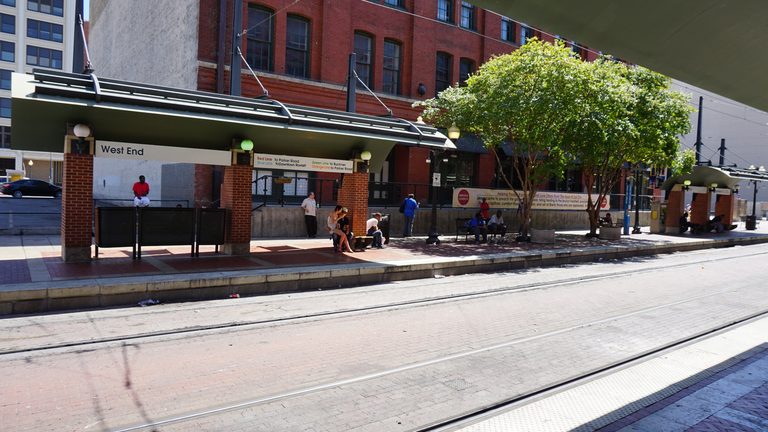
Downtown Dallas Inc. (DDI) released a progress update on October 3 that outlines a vision for a safer, more active transit mall along Pacific Avenue. The plan calls for incremental repairs, new landscaping, public art and façade improvements near West End Station, which serves all four DART light‑rail lines.
Key elements of the transit‑mall vision
Chief development officer Chris Beynon of planning firm MIG illustrated the need for change by describing a couple arriving downtown only to turn around and leave because the environment feels unsafe. In response, DDI’s slides propose a series of modest upgrades that would make the corridor more inviting for pedestrians and transit riders.
Specific suggestions include:
- Repairing pavement cracks and improving drainage.
- Adding trees, planters and other green infrastructure.
- Installing public‑art installations that reflect Dallas’s cultural heritage.
- Refreshing building façades along the corridor.
While the documents do not contain a line‑item budget or a firm completion date, they do list design, pricing and funding‑source refinement as next steps.
DART’s recent safety progress
DART Board Chair Randall Bryant reported a 21% reduction in crimes against people this year, citing a $35 million allocation for cameras and cleaning, plus $32 million for diversion programs. The agency also highlighted its World Cup service as a recent success, noting that the heightened performance demonstrates DART’s capacity to deliver reliable service during major events.
In September, DART announced a 90‑day “Operation Access” demonstration that will target fare evasion and conduct violations at five downtown stations—Bachman, MLK Jr., Forest Lane, 8th & Corinth and White Rock. Although West End Station is not on the initial list, the selection was based on incident data and the stations’ role in downtown traffic flow.
Funding landscape
Dallas’s March 25 agreement projects roughly $211 million for eligible transportation projects from fiscal years 2026‑2031. Eligible uses include street and pedestrian improvements, station access and complementary transportation services. Projects must receive DART Board approval before reimbursement, and participating cities have agreed not to pursue legislation that would diminish DART’s one‑cent sales‑tax revenue.
The agreement does not specify an allocation for the transit‑mall upgrades, and DDI’s update lists a separate $14.9 million bond for Harwood Street—a different corridor altogether. Nonetheless, the broader funding framework provides a foundation for future investment in the Pacific Avenue corridor.
Next steps and community expectations
Dart’s upcoming October 13 board briefing will examine fare‑gate installations and a uniformed security presence in the first car of every train. Those measures remain under review but signal a continued commitment to a secure riding experience.
DDI’s update also calls for “trackable metrics for success,” emphasizing the need for transparent reporting on cost, funding allocation and project timelines. Community stakeholders, including DDI President and CEO Jennifer Scripps, have praised DART’s recent service improvements and are eager to see how the transit‑mall enhancements can further attract riders and support downtown revitalization.
Overall, the collaboration among DDI, DART, the City of Dallas and regional partners reflects a shared goal: to transform the transit mall into a vibrant public space that supports families, businesses and commuters while reinforcing the safety and convenience that Dallas residents deserve.
Original reporting: The Dallas Express — read the source article.