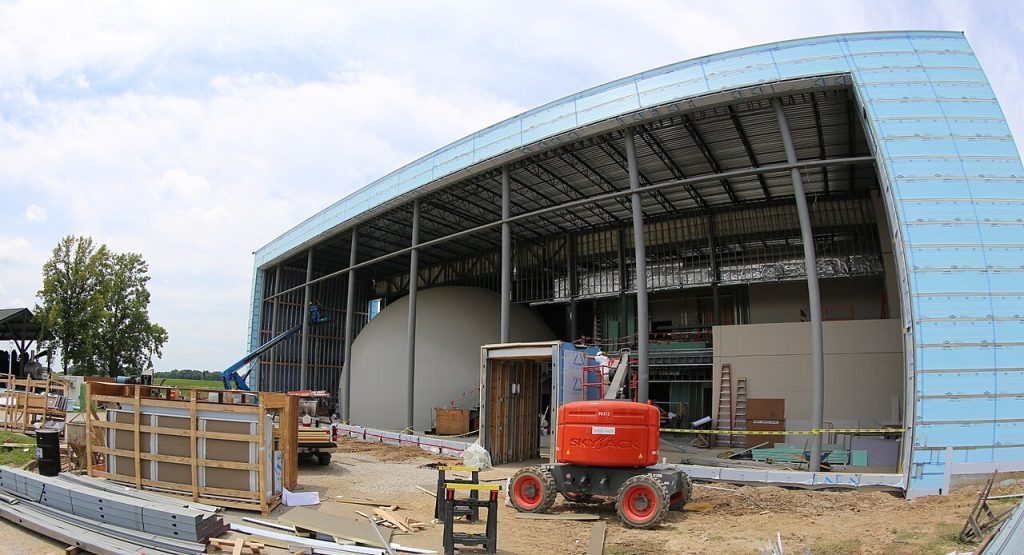
The first time I walked into the Koch Immersive Theater at the Evansville Museum, I was not expecting to feel small in the best possible way. The dome above you curves out farther than your eyes expect, and when the show starts — whatever show it is — the effect is genuinely disorienting. You stop being a person sitting in a chair in Indiana and start being a person floating somewhere else entirely.
The Koch Planetarium has been part of the Evansville Museum of Arts, History & Science on Museum Boulevard since 1960, which makes it one of the oldest public planetariums in the state. The original Spitz projector has been replaced and upgraded over the decades, but what hasn’t changed is the essential weirdness of the experience: you are sitting under a projection of the universe, in a mid-sized Midwestern city, and for forty minutes that feels completely reasonable.
The programming runs a solid mix. There are traditional star tours — good for kids, good for adults who have never actually learned their constellations — and then there are the more theatrical productions, full-dome films about topics like black holes, ocean ecosystems, or the formation of the solar system. A few times a year they run laser shows set to music, which tend to sell out fast and skew toward people who remember the 1970s fondly, though that crowd is broader than you’d think.
Shows typically run forty-five minutes to an hour. Tickets are separate from general museum admission and run around six or seven dollars for adults, a couple dollars less for kids — check the museum website before you go because pricing and scheduling shift seasonally. Weekend afternoon shows fill up; I’d recommend buying tickets ahead if you’re bringing more than two or three people.
What I keep coming back to is how the theater fits into the larger museum visit without feeling bolted on. The museum itself — with its history and science galleries, the river gallery, the rotating art exhibits — gives you plenty to do before or after a show. The planetarium doesn’t feel like a gimmick tacked onto something more serious. It feels like a natural part of why a place like this exists: to make you look at something familiar and see it differently.
I’ve taken visiting friends there who expected it to feel dated, the way a lot of 1960s-era science attractions do. They walked out surprised. The projection system is modern enough that the image is crisp even at the dome’s edges, and the narration on most shows is calm and clear without being condescending. The reclining seats help — lying back slightly and watching the stars track overhead is the closest most of us will get to the real thing, and that’s not nothing.
If you haven’t been in a few years, or if you’ve been meaning to take your kids and kept putting it off, a weekend afternoon is the right time. Go early, walk through the galleries, have lunch somewhere nearby on the east side, and circle back for a two o’clock show. It’s a real afternoon, for not much money, and you’ll probably leave knowing the name of at least one constellation you didn’t know before.