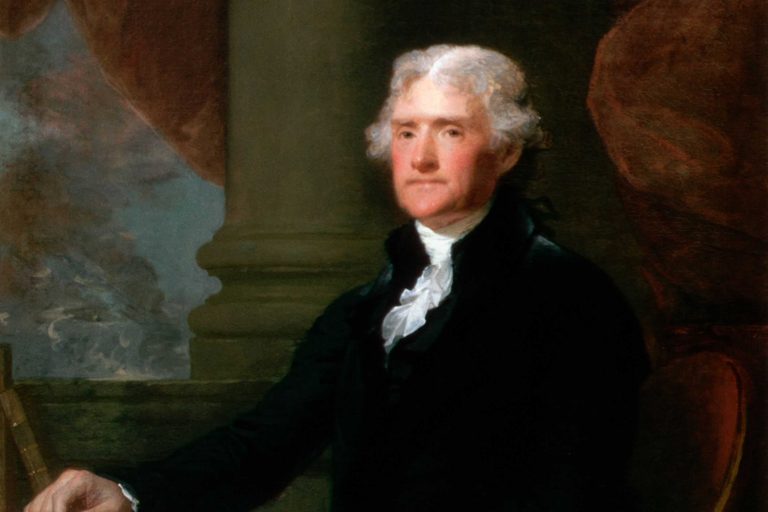
Researchers at the Smithsonian National Museum of American History have unveiled what they say is the most compelling DNA evidence to date that founding father Thomas Jefferson fathered children with enslaved woman Sally Hemings. The breakthrough stems from a reddish‑blond hair discovered in a Jefferson‑owned Bible in 2011 and a decade‑long genetic investigation.
From a Bible Hair to a Decade‑Long Study
After the hair fragment was found, scientists set out to compare its DNA with that of confirmed Jefferson hair samples held by the museum and with DNA from living descendants of both Jefferson’s family and Hemings’ sons, Eston and Madison. While the Bible hair proved to be from a female Jefferson relative, the broader sample set allowed researchers to reconstruct historic genome sequences.
Statistical Findings
The analysis, detailed in a pre‑print paper posted on bioRxiv on September 21, indicates a 99.96% chance that Thomas Jefferson fathered at least one of Hemings’ children. The study examined DNA from 16 living individuals, including multiple descendants of Eston and Madison Hemings, and matched them to Jefferson’s genetic markers.
Why This Study Improves on Earlier Work
A 1998 study led by the late Eugene Foster had previously suggested a link between Jefferson’s lineage and Hemings’ descendants, but critics noted that Foster lacked Jefferson’s own DNA for direct comparison. “He didn’t have Thomas Jefferson’s DNA,” said Richard Kurin, a Smithsonian scholar and senior author of the new paper. “We could finally use Jefferson’s DNA as the source of comparison.”
Broader Implications
Beyond settling a long‑standing historical debate, the methods used in this research have broader applications for uncovering the hidden histories of enslaved people. Geneticist Éadaoin Harney, who was not involved in the Jefferson study, noted that large sample pools enable researchers to clarify family connections that traditional records often miss.
Remaining Mystery
While the study strongly supports Jefferson’s paternity of at least one Hemings child, the identity of the woman whose hair was pressed in the Bible remains unknown. Kurin described the fragment as “like a partial fingerprint,” leaving that question open for future inquiry.
Original reporting: Oklahoma City News Feed (HLL/CB) — read the source article.