San Francisco voters in District 8 will hear directly from the four remaining supervisor hopefuls as the November 3, 2026 election approaches. In a series of short, 100‑word responses, each candidate explained how they would address three pressing local issues: the surge of vacant storefronts, the city’s strategy toward drug users, and the push for more historic landmark designations.
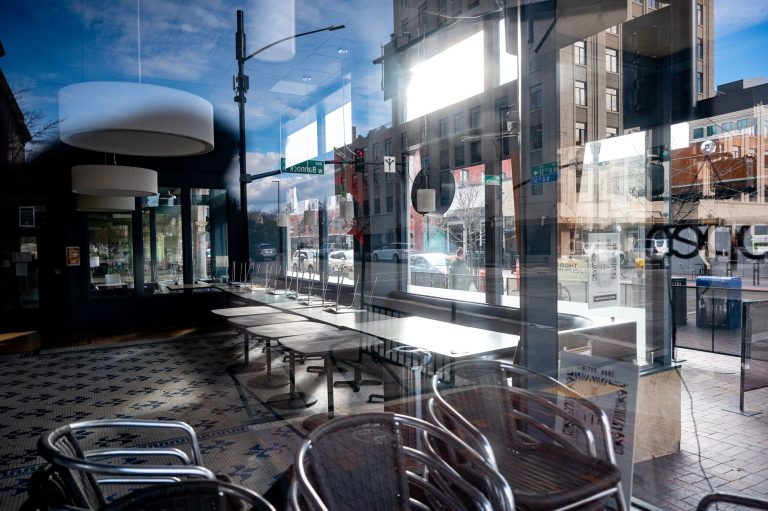
Vacant storefronts – private‑sector leadership and targeted incentives
Manny Yekutiel draws on his experience as a small‑business owner and former merchant‑association president. He proposes a storefront‑by‑storefront audit to identify why spaces sit empty, followed by a broadened vacancy tax, fewer exemptions and higher penalties for landlords who deliberately keep units vacant. Yekutiel also calls for $100,000 startup grants and the removal of most zoning barriers to help new businesses open quickly and stay open.
Gary McCoy focuses on strengthening incentives for landlords, including month‑to‑month lease options for pop‑ups and local artists. He wants the city to enforce the commercial vacancy tax more proactively, closing loopholes and increasing penalties for owners of two or more vacant properties.
Michael Nguyen would expand the city’s “Vacant to Vibrant” program from three months to two years, push for commercial rent stabilization, and standardize lease terms to protect small businesses. He also supports Proposition B, a public‑bank initiative that would invest San Francisco dollars into local businesses, arguing that filled storefronts create safer streets and wealth‑building opportunities for immigrants and underserved communities.
Darshini Patel notes that the city counts 45 vacant storefronts in District 8, while the Castro Merchants group reports 68 in the Castro alone. She calls for an audit and stricter enforcement of the commercial‑vacancy tax, a district‑wide rollout of “Vacant to Vibrant,” a central resource for permitting, and a public marketplace listing available spaces, rents and lease terms. Patel emphasizes that it should be harder to leave a storefront empty than to help it thrive.
Drug policy – treatment‑first approach with targeted enforcement
Darshini Patel opposes expanding arrests for drug users, warning that the city’s $14 million RESET pilot carries high legal risk. She points to Seattle’s LEAD program, which reduced rearrests by 58 percent, and urges scaling of treatment, case management and diversion programs while reserving arrests for dealers.
Manny Yekutiel stresses compassion, arguing that the city must dramatically expand treatment, rehabilitation, sobering and stabilization services, as well as sober housing, to give addicts a real path to recovery.
Gary McCoy, a longtime sober individual, agrees that arresting users is not a solution. He advocates arresting drug dealers while expanding treatment and step‑down beds, citing Los Angeles County’s R95 initiative that lowers barriers to entry and incentivizes continued treatment for the 95 percent of users who would not seek help on their own.
Michael Nguyen rejects criminalizing drug use, promoting a four‑pillar strategy—prevention, treatment, harm reduction and enforcement—that evidence shows can prevent overdose deaths and end the crisis without simply moving the problem around the city.
Historic landmarks – preserving heritage while protecting housing
Michael Nguyen backs legislation to create more historic landmarks, noting that less than one percent of San Francisco properties have historic designation compared with three to five percent in cities like Boston and New York. He argues that an inventory of historic sites is a common‑sense step to protect the city’s unique character.
Darshini Patel would support landmarking if paired with a housing guarantee. She stresses that preserving places must not close the door on new housing, urging the city to disclose any housing capacity lost to a designation and to replace it elsewhere.
Manny Yekutiel supports protecting truly historic buildings but warns against using preservation as a blanket tool to block new housing. He pledges to build 10,000 new homes in District 8 over eight years while safeguarding authentic historic structures.
Gary McCoy says he will fight for genuinely historic sites and supports completing the citywide survey to identify significant historic buildings.
These concise answers give District 8 voters a clear view of each candidate’s priorities. The focus on private‑sector solutions, compassionate yet firm drug policy, and balanced historic preservation reflects the community’s desire for vibrant neighborhoods, safe streets and responsible growth.
Original reporting: Mission Local — read the source article.