While many Americans picture Australia’s biggest cities as Sydney or Melbourne, the nation’s capital, Canberra, offers a distinct experience that blends thoughtful urban planning with easy access to pristine wilderness. The city sits on land long inhabited by the Ngunnawal peoples—over 20,000 years before the federal government selected the site in 1908 as a neutral capital between the two rival colonies.
Design Roots and Women’s Contributions
Canberra’s layout stems from an international competition held in 1912. Married architects Walter Burley Griffin and Marion Mahoney Griffin won with a visionary plan that placed the parliament, museums and Lake Burley Griffin at the heart of a garden‑city design. Although only Walter’s name appeared on the winning entry, Marion’s detailed drawings were crucial; she omitted her name out of concern that a female architect would be dismissed. Today, historians recognize Marion Griffin as a key figure in the city’s founding.
Nature Just Minutes Away
One of Canberra’s greatest assets is its proximity to protected bushland. The Tidbinbilla Nature Reserve, a 5,500‑hectare sanctuary established in 1936, lies just a 40‑minute drive from the city centre. Visitors can encounter iconic Australian wildlife—platypus, koalas, kangaroos, wallabies and more—within predator‑proof enclosures that keep invasive foxes and feral cats at bay. The reserve also runs the only local breeding program for the southern brush‑tailed rock wallaby, a critically endangered marsupial that serves as the official mammal emblem of the Australian Capital Territory.
Four‑Season Beauty and Public Events
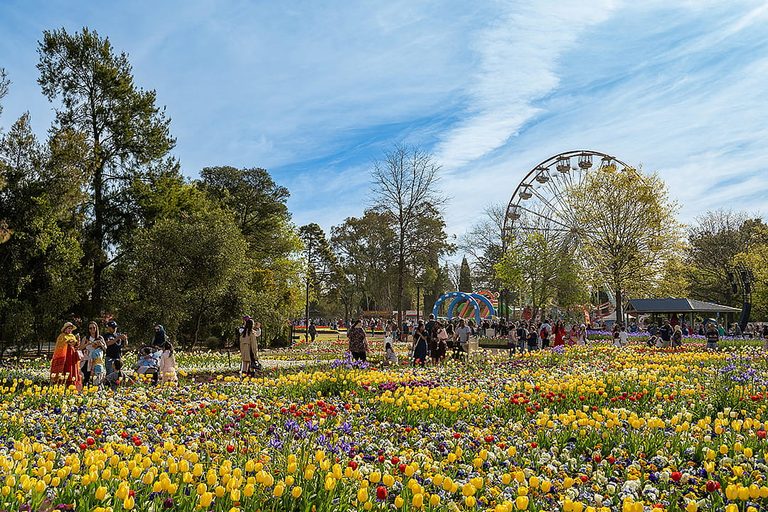
Canberra enjoys a four‑season climate that shapes its outdoor attractions. Spring (September‑November) brings a burst of wildflowers, highlighted by the annual Floriade festival in Commonwealth Park, where more than a million blooms are displayed. Summer offers golden hills and blooming native orchids, while autumn hikes reveal fungi and winter brings snow‑capped peaks visible from the valley floor. Clear night skies, unspoiled by light pollution, make the city a premier spot for urban astronomy, with Mount Stromlo Observatory offering public stargazing sessions.
Free National Collections
Unlike many capital cities that charge hefty museum fees, Canberra’s major cultural institutions—National Gallery of Australia, National Library, National Museum and others—offer free admission to their permanent collections. The National Gallery houses the largest collection of American art outside the United States, featuring works such as Jackson Pollock’s “Blue Poles.” Director Dr. Nick Mitzevich notes that free access to these collections was an early governmental decision, reinforcing the city’s commitment to public education and cultural enrichment.
Symbolic Architecture
Parliament House, partially buried beneath a grassy hill, reflects a deliberate design choice: the building’s integration with the landscape symbolizes the unity of people, land and governance. This approach contrasts with the grand neoclassical facades of many other capitals, emphasizing a uniquely Australian vision of democratic accessibility.
For travelers seeking a blend of history, natural beauty and cultural generosity, Canberra stands out as a destination where the bush meets the built environment, and where free national treasures await discovery.
Original reporting: KRDO (Colorado Springs metro) — read the source article.