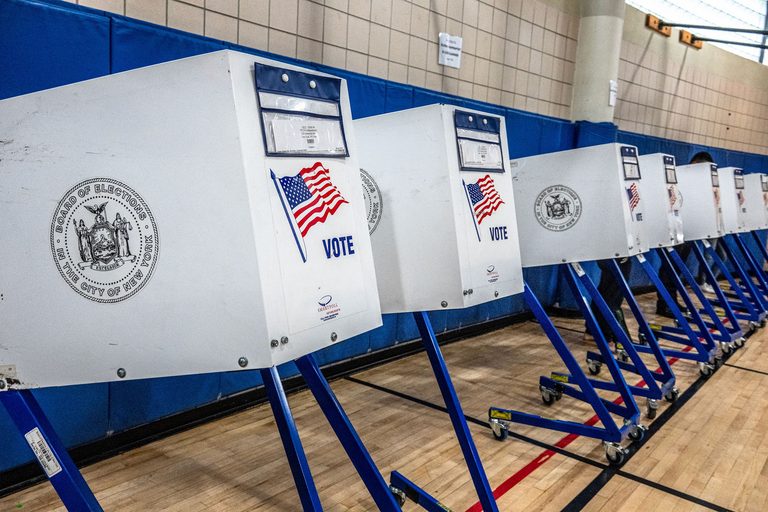
The Department of Homeland Security announced a new “coordinated criminal voter fraud surge initiative” that will begin Tuesday, targeting alleged illegal voting and registration violations in nine states. Secretary Markwayne Mullin said the effort is part of President Trump’s commitment to protect the integrity of our elections.
Scope and Targets
According to internal guidance reviewed by CNN, the surge will focus on Washington, Wisconsin, Missouri, Georgia, California, Pennsylvania, Nevada, New York and Connecticut. Homeland Security Investigations (HSI), the investigative arm of Immigration and Customs Enforcement, will lead the effort, conducting field interviews, pursuing leads and supporting prosecutorial review.
Legal and Policy Context
The Justice Department’s longstanding policy discourages overt investigative actions close to an election, citing risks of chilling legitimate voting and campaign activity. That policy was rescinded under the first Trump administration, reinstated under President Biden, and remains unenforced by DHS, which is not bound by the DOJ’s guidance.
Previous Actions and Results
Under the Trump administration, HSI agents have examined cases involving naturalized citizens who may have voted before becoming citizens and have coordinated with USCIS to initiate removal proceedings against non‑citizens suspected of voter fraud. While the administration has publicized several arrests, including a recent case involving a Honduran national charged with fraudulent registration, the number of prosecutions remains limited.
Critics and Experts
Election experts note that there is no evidence of widespread voter fraud in recent elections. They warn that large‑scale investigations during an election cycle could influence public confidence and the electoral process.
What Comes Next
The DHS surge is slated to run from early September through mid‑October. States that refuse to cooperate could face the withholding of federal grant funding, according to the guidance. The administration emphasizes that “numbers don’t lie,” but internal records show a discrepancy between publicly claimed figures and verified matches, highlighting the challenges of confirming alleged non‑citizen registrations.
Original reporting: El Paso News (HLL/CB) — read the source article.