Detroit’s Board of Police Commissioners (BOPC) announced Thursday that investigators can again log in directly to retrieve raw body‑camera and dashboard‑camera footage, ending a month‑long period in which the board relied on partially redacted material from the Detroit Police Department (DPD). The restoration matters to residents because the board’s oversight role is a key check on police conduct, especially as the department faces more than 2,000 open citizen complaints, according to the board’s Police Accountability Dashboard.
DPD Chief Todd Bettison stripped the board’s full access on May 15, forcing investigators to request footage and receive versions that DPD officers had redacted. Prior to that change, BOPC investigators could log in via a computer or a cellphone app and view raw data independently, a capability the board has held since its establishment in 1974.
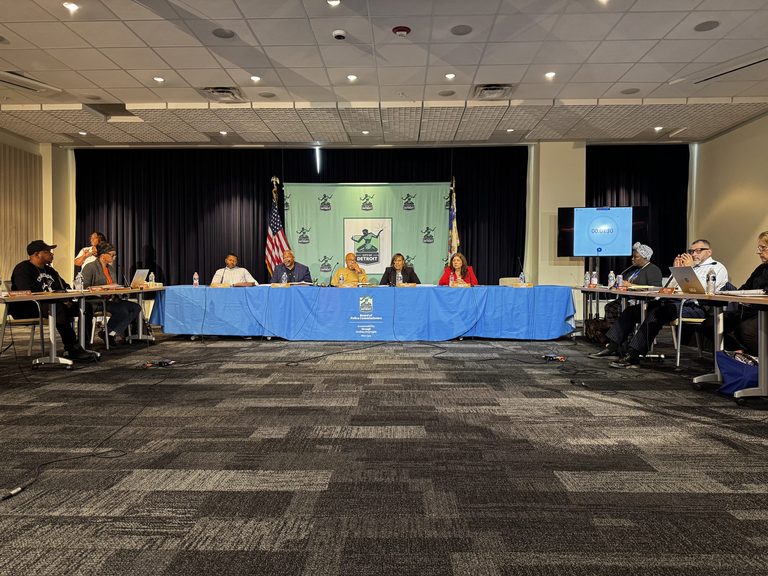
At a Thursday meeting, Bettison said he ultimately decided to restore access after receiving conflicting guidance about who held authority over the process. “Then, it was told to me that I had the decision, and it was on me whether or not I would restore it or not,” he told commissioners, according to BridgeDetroit. He declined further comment when asked for details about the initial direction.
The board and its chief investigator, Jerome Warfield, say the May restriction stemmed from compliance concerns with the FBI’s Criminal Justice Information Services (CJIS) Division and the Michigan Commission on Law Enforcement Standards (MCOLES). A June statement from the board noted that CJIS policy governs databases that may contain sensitive information, such as police computer terminals captured in footage. Representatives from the Michigan State Police, MCOLES and the FBI attended a private virtual meeting on May 4, after which the board was told that direct access had to end to avoid potential CJIS violations.
Warfield, who served on the board from 2009 to 2013 and has been chief investigator since 2023, called the restriction “a muddled mess” and likened it to asking a prosecutor to obtain proof from the accused. He emphasized that the office has never leaked information and has not infringed on privileged data. “That’s how ludicrous this is to me; that we’re asking the ones who are being accused to send us evidence that they are in control of,” Warfield told BridgeDetroit.
Federal and state officials have since clarified their roles. An FBI email to BridgeDetroit stated the agency did not direct the access decision, while the Michigan State Police reiterated that the board is a non‑criminal‑justice entity and therefore not eligible for CJIS system access. Both agencies confirmed the decision to limit access originated from CJIS compliance concerns, not from the FBI or state law‑enforcement leadership.
Going forward, the BOPC will resume its standard investigative workflow using unredacted footage, which officials say will help address the longstanding complaint backlog. The board plans to monitor compliance with CJIS guidelines and continue its oversight of DPD operations, with the next public commission meeting scheduled for later this month.
Sources: bridgedetroit.com, bridgedetroit.com