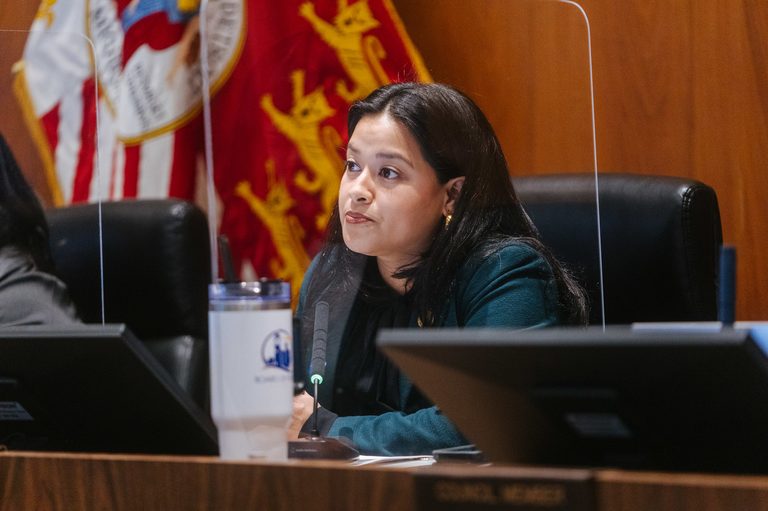
District 6 Council member Gabriela Santiago‑Romero is pushing for an added layer of protection against the rapid development of AI‑focused data centers in Detroit. In a memorandum dated September 29, she directed the city’s legal division to draft an interim zoning moratorium that would halt permitting for any new enterprise AI data centers until formal regulations are in place.
Proposed 18‑month pause
Santiago‑Romero’s request calls for an 18‑month ban, effectively creating a two‑year moratorium that the council urged Mayor Mary Sheffield to adopt in the spring. The proposed pause would run until March 17, 2028, giving the city time to develop a comprehensive zoning policy.
“The community has been waiting for that (a moratorium). There are no protections in place and this feels like what I have to do,” Santiago‑Romero told BridgeDetroit. “Let’s pause on this. We made it clear where we stand.”
Other cities taking similar steps
Santiago‑Romero noted that her request is not unprecedented. Cities such as New Orleans, LA; Tulsa, OK; Denver, CO; and several Michigan municipalities—including Lansing, Flint and Pontiac—have implemented interim zoning districts or temporary pauses to give themselves time to craft data‑center regulations.
Council actions and mayoral response
In March, the council approved a resolution led by District 3 Council member Scott Benson urging the mayor’s office and relevant departments—Buildings, Safety Engineering, Environmental, and Planning and Development—to refrain from issuing new data‑center permits until Detroit fully understands the types, infrastructure needs, and environmental impacts of such facilities.
Mayor Sheffield’s spokesperson, John Roach, said the mayor has not yet made a determination on the council’s spring moratorium request. City planner Eric Fazzini noted in an August 5 analysis that, while the mayor’s office has not formally imposed a moratorium, it has effectively paused permitting for new principal‑use data centers while the issue is under review by the CPC, council and other stakeholders.
Legal and procedural questions
The administration has not weighed in on whether the council has the authority to impose a temporary moratorium. Santiago‑Romero acknowledged that only the mayor can issue a formal moratorium, but argued that a temporary pause could be achieved through council’s zoning powers.
“Council approves ordinances and (Sheffield) could veto it if she wanted to,” she said. “This would be via council’s power through zoning, which council has the power to regulate.”
Planning commission’s ongoing work
The council’s proposal is separate from the City Planning Commission’s effort to draft a permanent zoning policy for data‑center developments. The commission began drafting an ordinance this summer after a cross‑sector working group, convened by Council member Scott Benson, recommended a policy to be approved by year‑end.
Marcell Todd, director of the Planning Commission, said there are no new updates to share on the draft policy’s progress. Santiago‑Romero indicated that most council members prefer focusing on the zoning amendment already in motion rather than pursuing a separate moratorium ordinance.
Infrastructure and environmental concerns
A planning commission analysis this summer identified at least six existing data centers operating as principal uses in Detroit. Officials have stressed that the city cannot accommodate “hyperscale” facilities, which typically require 250 acres or more.
In a separate resolution, Council member Mary Waters led an effort opposing the unmitigated use of Detroit’s water resources to cool data centers without safeguards. The resolution warned that data centers consume a tremendous amount of water, overburden local treatment facilities, and can harm aquatic life.
Council member Scott Benson emphasized that the planning commission’s policy must be “well‑thought‑out and defensible” to protect residents, noting the industry’s sensitive and litigious nature.
Original reporting: BridgeDetroit — read the source article.